Article
Expert Insights to Transform Your Evidence Generation Strategy
Best Practices from Medtech Leaders
By Stéphanie Flipo, Director, EU Clinical Strategy, and Ramona Galantonu, PhD, Director, EU Medical Strategy, Veeva MedTech
Evidence generation is one of the most strategic imperatives in medtech today. It is not only the backbone of regulatory approval and patient safety – it’s also a direct driver of revenue, market access, and long-term business growth.
Yet, across the industry, the process remains fragmented, slow, and resource-intensive. With ever-changing and tightening global regulations, medtech companies face an urgent need to modernize the way they plan, generate, and activate clinical evidence.
Global medtech mandates like EU MDR and IVDR have permanently raised the bar for clinical evidence, establishing a new and demanding baseline for market access. With the EU AI Act, the European Health Data Space (EHDS), and other regulations on the horizon, the pressure to generate more comprehensive and continuous evidence is only intensifying, making data strategy a competitive differentiator.
To explore how leading companies are tackling these challenges, we conducted interviews with four innovative medtechs – Smith+Nephew, B. Braun, Philips, and Roche Diagnostics. These discussions revealed shared challenges, best practices, and emerging needs that point toward a new model for how clinical evidence can drive growth, efficiency, and impact.
The strategic drivers of clinical evidence generation
Across all four organizations, one message came through clearly: clinical evidence must connect directly to revenue, patient needs, and product safety. Companies are shifting from viewing clinical evidence generation as a regulatory necessity to recognizing it as a strategic business capability.
This shift is driving structural and cultural change – where clinical, medical, commercial, regulatory, and operational teams collaborate to design studies that not only demonstrate safety and efficacy but also fuel commercial differentiation.
Core operational challenges
Despite the strategic intent, operational barriers remain widespread and consistent across the industry:
- Siloed processes: Teams often work in isolation, creating inefficiencies and hampering synergies between functions.
- Lack of transparency: Organizations struggle to maintain visibility across planning, execution, and activation, which can delay clinical evidence delivery.
- Fragmented accountability: Process ownership varies widely, with unclear lines of responsibility.
- Complexity: Evidence generation is inherently cross-functional and strategic—making alignment both essential and difficult.
These challenges collectively slow down time to market and dilute the impact of clinical evidence once it’s generated. The companies we interviewed are tackling these head-on with innovative governance structures and cultural change.
Best practices from the field
1. Smith+Nephew – Governance and focus

In our interview, Boese shared how his company built a foundation of discipline and oversight through a clinical review committee (CRC) that meets monthly to ensure governance, prioritization, and progress tracking. Smith+Nephew’s approach emphasizes focus – each study is designed around a single primary endpoint.
By concentrating on the evidence required for a specific goal (such as regulatory clearance), the company reduces ambiguity, accelerates decision-making, and ensures that outcomes are actionable.
“We found we needed to have a better preparation phase for these studies and have better designs.” – Kolja Boese, MD, PhD, Head of Global Medical Affairs, Smith+Nephew
As Boese described, “We have seen in past studies that we often lost focus or didn’t have the right focus to start with. We had to amend studies several times to address clinical reality expectations of our notified bodies or stakeholders and also to address the need for more cost efficiency. And we found we needed to have a better preparation phase for these studies and have better designs.”
This focus extends beyond study execution. Smith+Nephew is also working to improve evidence activation, using study outputs proactively to support marketing claims and inform product positioning.
2. B. Braun – Breaking down silos and building strategy

B. Braun’s journey centers on bridging cross-functional gaps. Marius Selig, MSc is the director of medical scientific affairs at the B. Braun division Aesculap and oversees clinical studies and evaluations. A key department contributor since 2016, his expertise spans clinical research, development of medical-scientific strategies, and the effective usage of Real-World Evidence. When we spoke with Selig he said that the medical science affairs (MSA) team plays a pivotal role, improving communication across clinical, marketing, and sales teams.
Through educational sessions, they connect evidence to commercial impact – helping sales and marketing teams understand how data can support market differentiation and customer engagement.
“If you want to fully leverage medical insights for a medtech company, all the functions need to work together and swim in the same direction.” – Marius Selig, MSc, Director of Medical Scientific Affairs, Aesculap
Selig explained, “If you want to fully leverage medical insights for a medtech company, all the functions need to work together and swim in the same direction.”
B. Braun also developed a strategic framework that aligns evidence generation with business goals such as revenue growth and clinical preference. This ensures every study serves a broader commercial and strategic purpose.
Looking ahead, B. Braun is becoming a more data-driven company, investing in automation, AI tools, and analytical skills to translate medical insights into business value.
3. Philips – Building connections through collaboration
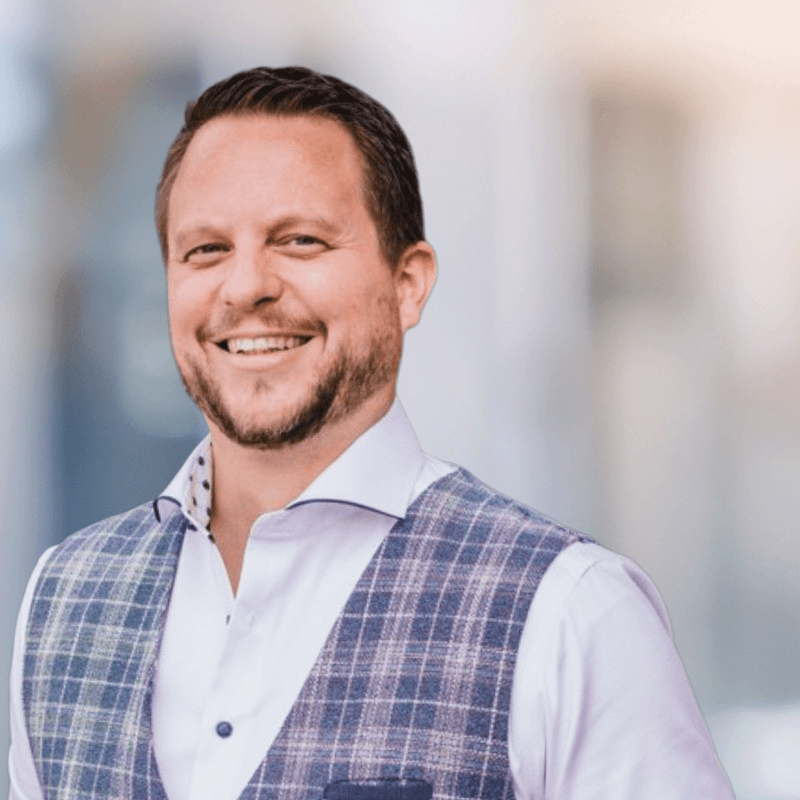
For Philips, success depends on bringing people together. Martijn van Steennis is the global chief medical officer of diagnostic imaging at Philips and manages teams in imaging-related areas including medical affairs, medical safety, and clinical affairs. He also provides medical thought leadership for MRI, CT, and diagnostic x-ray businesses. Through our conversation van Steennis noted that Philips established cross-functional boards where key leaders regularly meet to review risks, share updates, and align on evidence priorities.
“The advantage is we have more oversight of who’s doing what. We can harmonize all the different types of studies that we do across the world a little bit better.” – Martijn van Steennis, MD, Global Chief Medical Officer of Diagnostic Imaging, Philips
This governance structure fosters organizational clarity, reducing confusion and ensuring proactive participation from critical teams early in the process. van Steennis noted, “The advantage is we have more oversight of who’s doing what. We can harmonize all the different types of studies we do across the world a little bit better. We may speak different languages across the company, but when it comes to execution, we all do the same.”
4. Roche Diagnostics – Holistic ownership and unified strategy

Tilman Rüsike, PhD is the lifecycle leader for immunoassays and clinical chemistry at Roche Diagnostics’ near patient care business and has over a decade of experience in strategy and healthcare innovation. His mission is to rethink how we approach strategic and innovation decision-making, powered by generative AI, grounded in systems thinking, and applied to complex environments like diagnostics.
“There’s one person who owns the full end-to-end delivery of the portfolio. They act as the head of product and global commercialization, and they are the decision maker for any strategic trade-offs.” – Tilman Rüsike, PhD, Lifecycle Leader Near Patient Care, Roche Diagnostics
During our discussion, Rüsike offered a strong example of holistic ownership with Roche Diagnostics’ portfolio lead model, which gives a single individual responsibility for the entire evidence process – from planning to execution to activation. Rüsike clarified, “There’s one person who owns the full end-to-end delivery of the portfolio. They act as the head of product and global commercialization, and they are the decision maker for any strategic trade-offs.”
Roche Diagnostics also emphasizes the importance of being extremely clear on the product and its intended use from the very beginning. By defining the product precisely, teams can design more targeted studies and align faster around what success looks like.
Finally, Roche Diagnostics’ model brings all functions to the same table, developing a unified strategy that integrates regulatory, clinical, and commercial goals.
Common threads and industry-wide insights
Every company we spoke with recognized that time is the ultimate constraint. Specifically, the timing of evidence delivery is business critical, because those that reach the market first gain a huge advantage over the competition.
Although timing can vary drastically between product class and segment, organizations may benefit from analyzing process timelines at a granular level to understand the true duration of each component. This could help them establish reference ranges to define ‘what good looks like’ for evidence generation.
In addition to timing, three core best practices emerged across all interviews:
- 1. Holistic ownership: Assigning clear accountability for the entire evidence journey—from study design to evidence activation—creates focus and speeds execution.
- 2. Clear product definition: Alignment begins with clarity and a shared understanding of the product’s purpose and claims streamlines study design and regulatory strategy.
- 3. Unified strategy: When all functions co-create one evidence strategy, duplication decreases, communication improves, and decisions accelerate.
These practices transform evidence generation from a fragmented activity into an integrated business process that delivers measurable value.
The future of evidence generation
Across all four companies, the vision for the future centers on automation, integration, and data-driven decision-making.
- Automation and AI: From protocol drafting to report generation, AI will eliminate manual work
and accelerate timelines. For example, Smith+Nephew envisions a technology solution that can learn from past
studies to draft better, faster protocols. “We’re constantly reinventing the wheel, and building a database of
things that work, like a way to draft protocols that’s plug-and-play, drag-and-drop and is much more efficient
than doing it all by hand,” said Boese.
Philips, plans to leverage AI to continuously monitor new literature to improve post-market surveillance. van Steennis explained, “Every year we have to scour the internet for our many products and look for relevant insights in adjacent areas. AI should be able to help there and do it in real time.” - Data-driven planning: Predictive tools—like site selectors and benchmarking systems—will optimize resource allocation and study design. Roche Diagnostics wants to utilize benchmarks to set more realistic study timelines. Rüsike shared, “Whenever you plan a study, it’s good to understand the benchmark timing. This drives internal transparency on where you are, but also external transparency.”
- Human-in-the loop: These advances will not replace human judgment but will amplify strategic thinking. At B. Braun these efficiencies will help re-skill teams into roles like data analysts, enabling them to drive business value and focus on patient outcomes. Selig expanded, “We need to take advantage of these insights that we generate and transfer them back into our pipeline. This drives our new technologies, our innovation potentials, and the evolution of our products.”
Conclusion: From evidence to action
The insights from Smith+Nephew, B. Braun, Philips, and Roche Diagnostics show that effective evidence generation is no longer just a compliance exercise—it’s a strategic differentiator.
As regulatory expectations rise and market competition intensifies, the organizations that succeed will be those that treat evidence generation as a core business function, not a cost center. They’ll also need to build cross-functional collaboration and clear ownership into their processes, and leverage data and technology to drive transparency, speed, and smarter decision-making.
It’s time to reflect on your current model, redefine ownership, and reimagine evidence generation as a catalyst for growth.
To learn more about how Smith+Nephew coordinates efforts across clinical and medical affairs, read this case study.