Making a Compelling Case to Invest in Quality Transformation
An Executive Guide for Medtech Quality Professionals
Quantifying the hidden costs of maintaining the status quo will demonstrate a clear ROI to standardize, streamline, and digitize quality processes. Defining goals and clearly communicating benefits, tailored to each function, will drive senior managers and stakeholders to adopt modern technology.
Introduction
Innovation and the move to patient-centric, outcomes-based medicine is transforming the life sciences industry. To enable this shift, quality management must expand beyond its traditional compliance focus and become a proactive, multifunctional effort that improves business outcomes.
Modern cloud technology powers this transformation by providing a unified and connected ecosystem that streamlines quality processes. The result is cross-functional collaboration across internal functions such as regulatory and manufacturing with external suppliers, contract research organizations (CROs), and contract manufacturers (CMOs).
Early adopters are already seeing the benefits of modern quality systems in increased revenue and reduced risk, cost, and inventory. These results are driving more medtech companies to start building a strong foundation for automated and standardized quality processes. Quality transformations are accelerating, with 88% of medtech companies planning to modernize their postmarket quality management within the next three years.
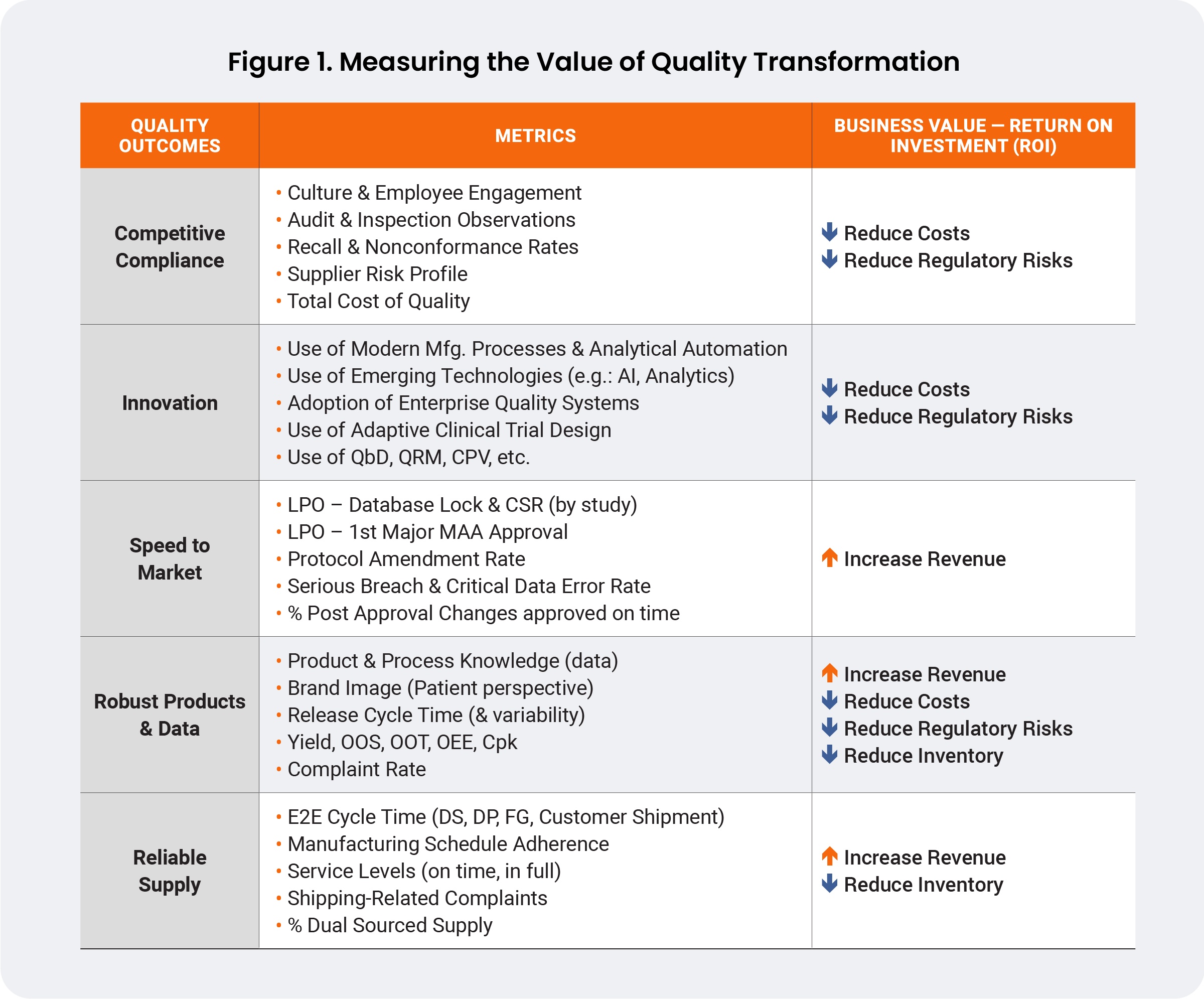
A new technical foundation based on process standardization is a fundamental step of the quality transformation journey. It may require higher upfront costs, but the transformation delivers significant return on investment (ROI) and long-term improvements in business results, as shown in Figure 1.
While many companies are seeing the benefits of modernization, 68% of medtech companies still rely on manual processes or outdated legacy systems, which can lead to significant delays and compliance risks.
The key to a successful quality transformation requires support from senior leaders across business and IT. Quality leaders should build a compelling case for change by:
- Revealing the hidden costs of traditional software—which are overlooked in most ROI calculations—on the bottom line
- Detailing the cost and time required to maintain the status quo and quantifying the benefits of modernization to business groups and users
- Showing how connected data and processes will deliver the insights for continuous improvement and generate savings by reducing the quality problems
- Customizing the message to C-level executives from finance, marketing, and security based on the key objectives of each group
Articulating the Need for Change
You may already know how modern quality systems improve day-to-day operations, but most of your colleagues won’t. When developing a business case, start by defining what quality transformation means for your company, its quality department, and each key function that works with quality. Wherever possible, use concrete examples relevant to each stakeholder group so that they do not see the project as just another technology implementation. It is important to emphasize that modern quality solutions:
- Advance speed and agility across the product life cycle, relieving quality teams from paper-based manual processes and decades-old technologies that require users to log in and out of multiple applications to complete a single task
- Enable organizations to standardize quality processes globally across different functions and products, eliminating the back-and-forth between quality and other departments such as regulatory affairs
- Bring together historically disconnected GxP training, content management, and quality management processes in one platform, providing users with real-time access to the information needed for better decision-making
- Allow users to manage risk and quality within the same system, using analytics to prioritize processes based on level of risk
- Highlight intelligent automation that enables quality teams to manage complex processes such as audits, complaints, and change control with speed and agility. In addition, teams can automatically identify recurring quality events, classify complaints, and check for duplicate data, improving efficiency and facilitating right-first-time manufacturing, quality by design, and operational excellence
According to McKinsey & Company, medical device companies that upgrade their quality systems reclaim 1.5% to 3.0% of their annual revenue in operational savings while safeguarding up to $3 billion in company value from catastrophic product failures. Ultimately, leading medtechs generate 3% higher sales growth and 15% higher profit margins than low-quality competitors.
Business Value of Modern Quality Systems
Increase Revenues
- Fewer product withdrawals
- More new product development
- Faster regulatory approvals and new product launches
- Better global brand reputation
- Better supply chain performance and fewer product shortages due to improved ability to fulfill unexpected surges in demand
Reduce Costs
- Fewer nonconformances, CAPAs, and product recalls
- Lower operational costs and fewer QA resources needed to support systems
- Fewer adverse events
- Shorter training hours
- Better yields, increased right-first-time development outcomes, reduction in number of complaints, and lower capital expenditures
- Lower total costs of ownership for QMS and documentation
Reduce Inventory
- Fewer testing requirements
- Shorter end-to-end cycle times
Reduce Overall Risk
- Fewer inspection days and negative inspection findings
- More opportunities for improvement that can be found by staff
- Reduced overall product risk profile
Determining True ROI
When evaluating the cost of modern quality solutions, it is essential to consider the hidden costs required to support legacy quality software. This includes all costs for hardware procurement or outsourced hosting, space, labor, and power, as well as the time and resources that are required for system upgrades and downtime.
Another important cost consideration is validation, which is greatly simplified and accelerated with modern cloud solutions because vendors handle infrastructure qualification (IQ) and operational qualification (OQ), and leverage industry best practices for performance qualification (PQ).
Streamlined processes also improve collaboration with external business partners by speeding secure access to vital information. Be sure to estimate all the time, costs, and potential noncompliance risks that are involved in the way that your company currently finds and shares information with its contract partners.
Each company requires specific key performance indicators (KPIs) based on its business model and level of quality management maturity. Understanding how these metrics are related, and how they impact revenues, costs, inventory, and regulatory risk, will help you make more accurate assessments of ROI.
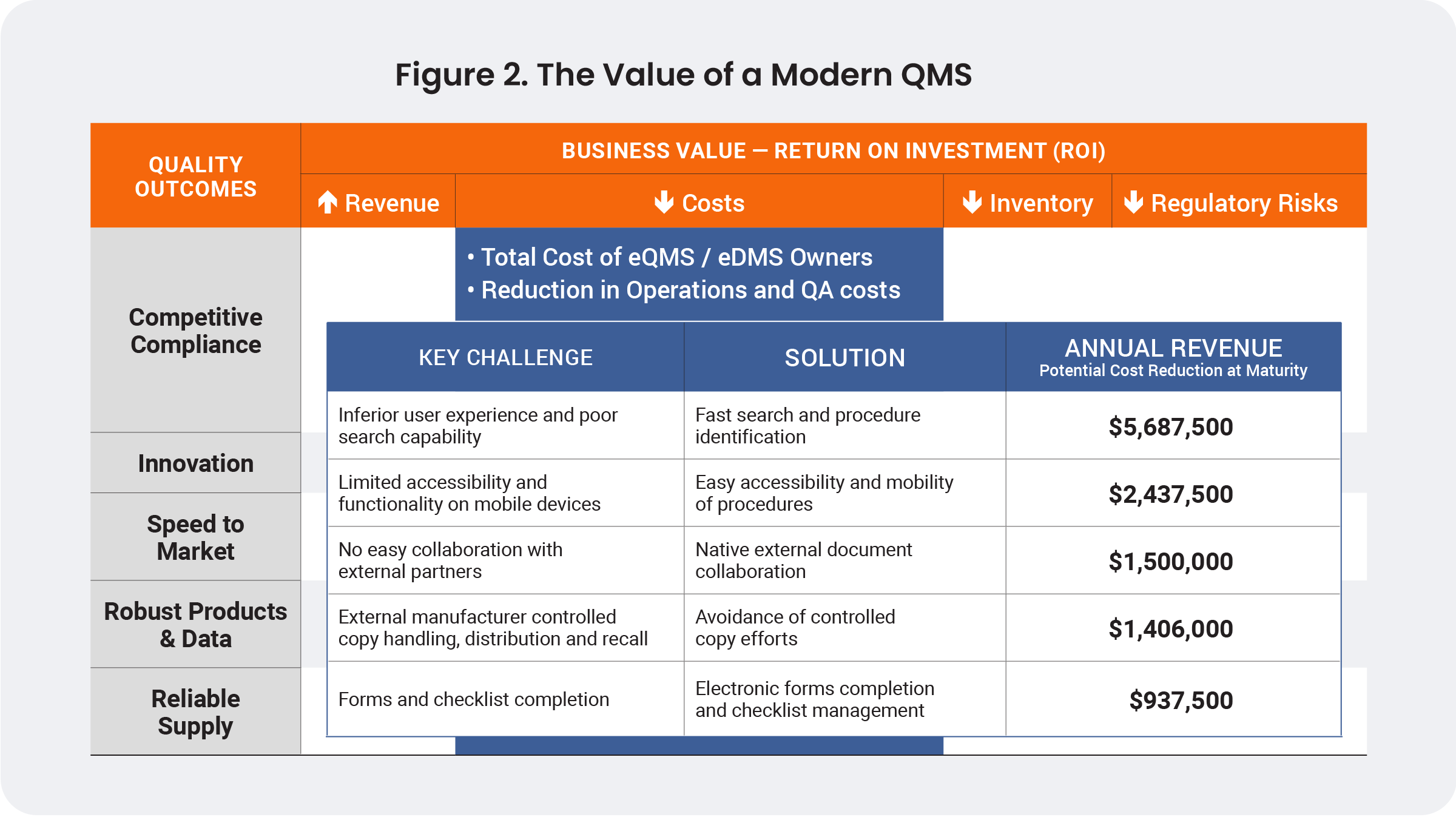
TIP: Consider and assess all potential business outcomes as you begin to build a business case for quality modernization. Acquisition cost may be dwarfed by the savings that would result from lower inventories and cost reductions in documentation, CAPA, risk analysis and training (Figure 2).
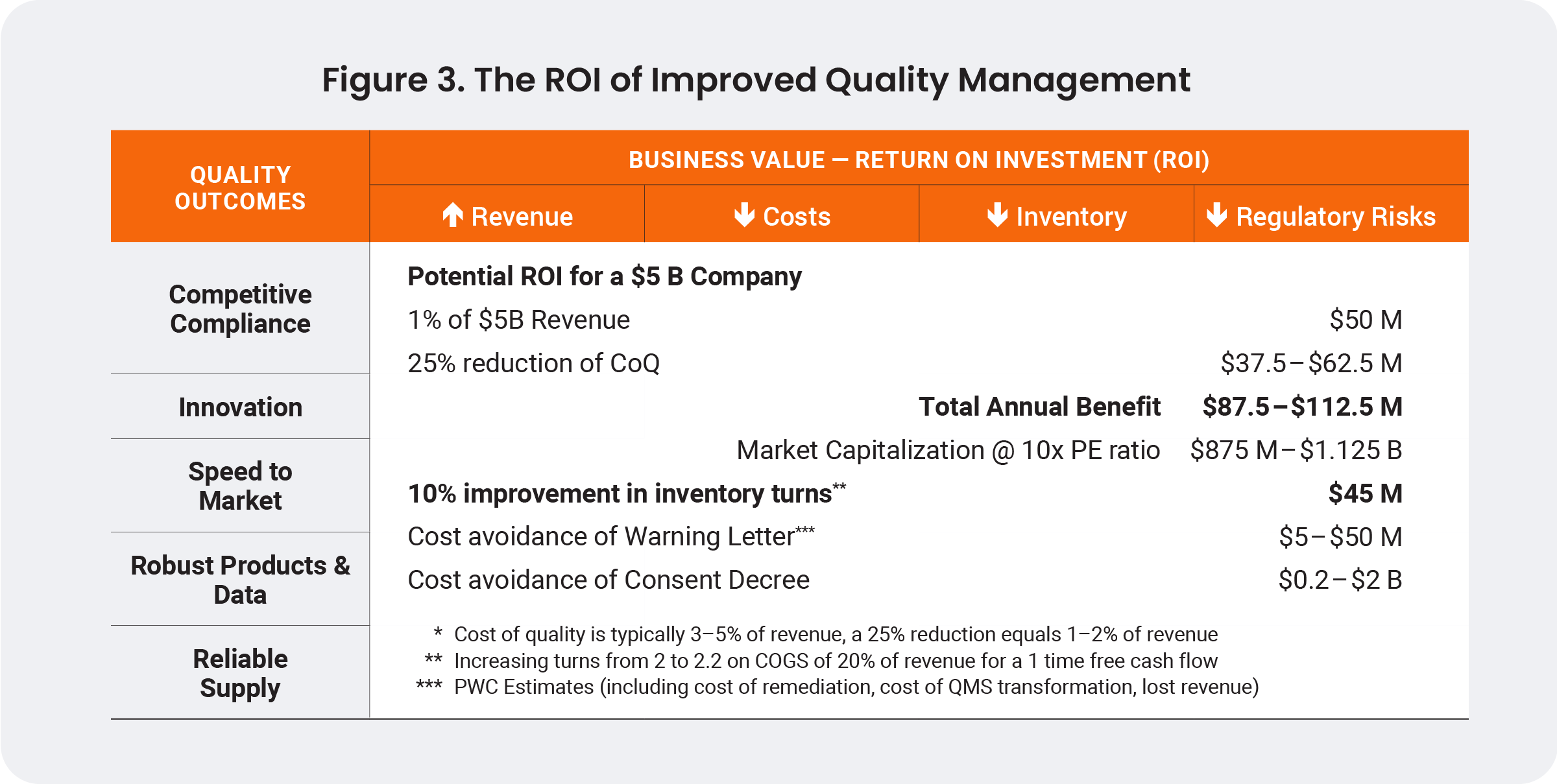
Consider the case of a $5 billion company that can achieve $50 million in savings by improving quality management, boosting overall revenues by a full percentage point (Figure 3).
Even a 25% reduction in the cost of quality would allow it to achieve $37.5–$62.5 million in savings, freeing $1 billion in capital, as determined by applying savings to the maximum capitalization rate at a price-earnings ratio of 10. A 10% improvement in inventory turns would free up $45 million in cash.
Examine Pain Points and Quantify Their Costs
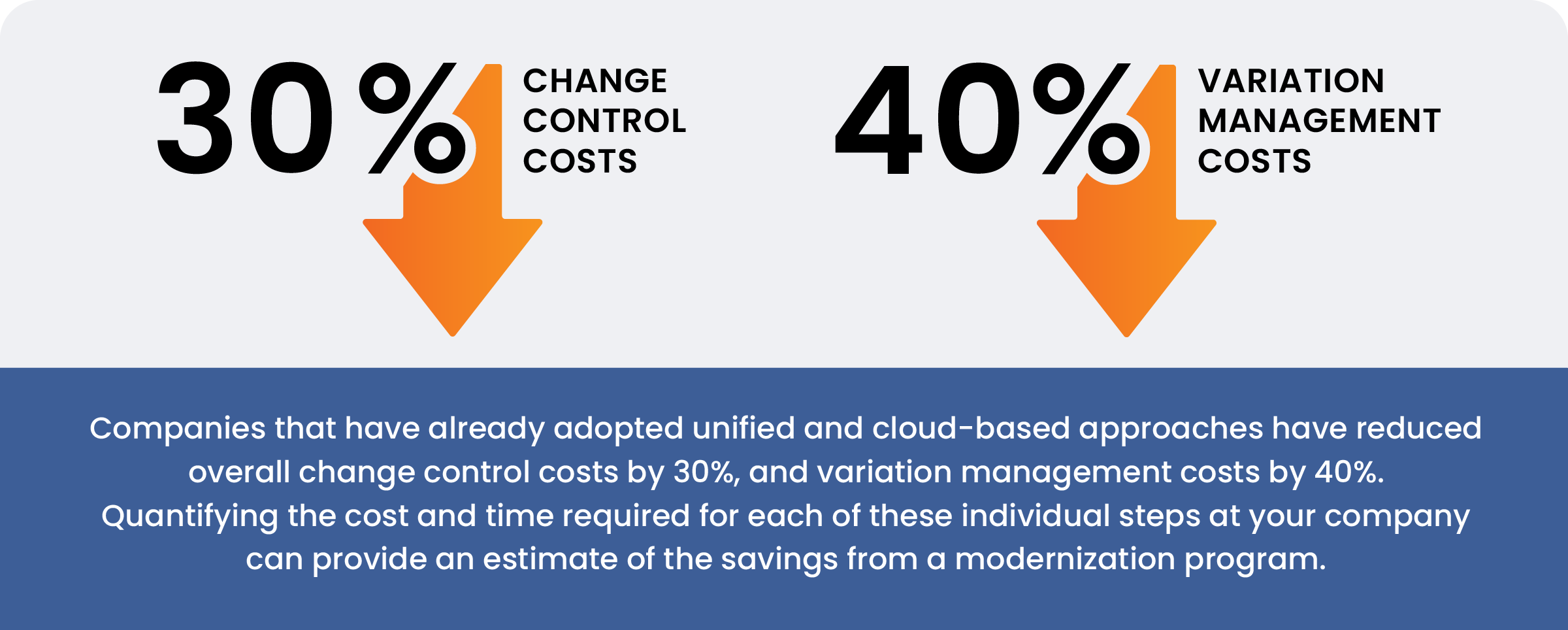
Now, go deeper and consider the annual cost of performing one crucial quality-management exercise at your facility or within your organization. A good candidate would be change control, an essential but costly and time-consuming effort that protects product quality and patient safety.
For example, if a process intermediate has changed for an approved product, regulatory teams first need to see which countries and internal documents will be affected, and supply chain teams must examine data from individual product lots. After those teams estimate the impact of the change, the quality team must then identify and revise any affected documents based on the results of the assessments.These changes, in turn, will trigger new user-training programs, and the assessment of new risks that will result from the change.
Using traditional quality software and paper-based processes, each of these steps occurs separately in disconnected systems, increasing the risk of compliance failure. Not only does this approach increase hidden quality management costs, but the time required to get things right can delay new product releases.
In contrast, adopting a modern approach connects different quality applications, QMS, documentation, and training so that they are on a single platform, eliminating silos to streamline change control and other processes. Quality teams can react to impact assessments and track progress directly from QMS. Document change control then automatically drives the development of new training programs so that users receive relevant change-related training assignments without having to leave the application.
Convincing the C-Suite
Discussing change in terms of savings is not enough. Today, the conversation around transforming quality management must emphasize its potential benefit to the overall business.
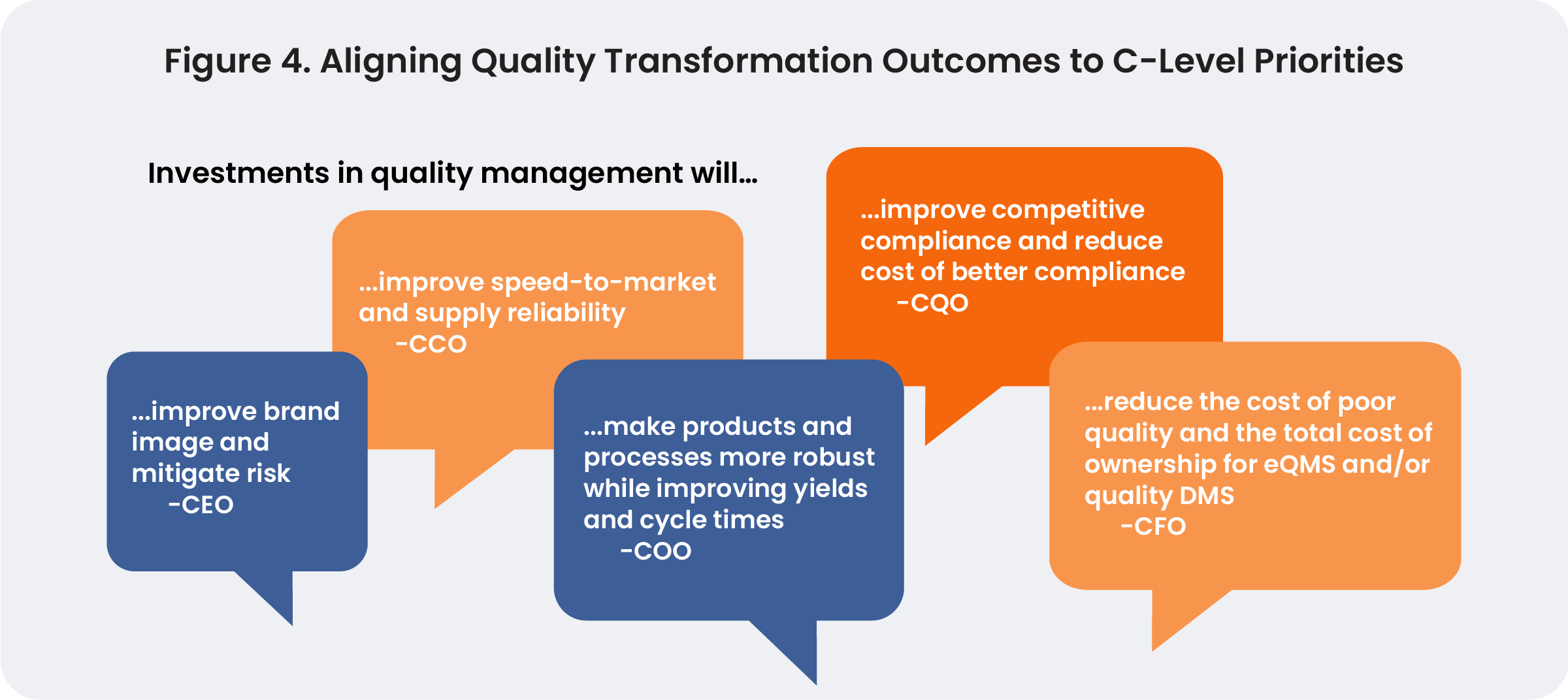
Remember that most top executives don’t speak the language of quality. They often won’t understand the true cost of a deviation, complaint, or recall. Tailor your message to the appropriate executive level to demonstrate the value of improved quality management. Figure 4 presents the fundamental messages that must come across most clearly to each C-level executive.
Summary
As medtech R&D and manufacturing become more complex and move from product- to patient-centric business models, companies need to optimize quality management by applying more robust digital systems and simplifying and harmonizing processes with industry best practices.
Senior management and stakeholder support will be needed for this transformation, which will deliver greater speed and agility across the value chain, increasing the overall business value. By identifying metrics that matter and connecting them to the key objectives of each business leader or group, quality leaders can build a strong business case for investment in quality transformation.
Justifications should focus on how modern approaches eliminate the hidden costs of traditional systems, improve scalability and agility, and enable companies to innovate, reduce costs, and increase revenues. It’s also important to emphasize that companies in the industry have already taken these steps and are realizing significant improvements in efficiency. Gathering the necessary information requires effort but will pay off in streamlined operations and better business results, enabling increased focus on patients.