Industry Overview: The State of Medical Affairs in Medtech
A recent Veeva survey across medtech medical leaders in the U.S. and Europe provide a look at where the industry stands today and the opportunities to solidify its strategic position.
With its expanding influence across the product lifecycle, medical affairs is vital to medtech’s strategic success.
A recent survey of medical leaders across 36 US and European medtech organizations provides a closer look at the function’s current state. The findings highlight how leaders perceive their value and identify the critical steps needed to quantify their strategic contributions and accelerate enterprise growth.
Medtech Roles and Impact
Defining the medical affairs role
Medtech organizations view medical affairs as a broad function with responsibilities ranging from evidence generation and safety, to field support and product development.
How is the medical affairs role defined within your organization?
| 25% | Essential for evidence generation, patient safety, and scientific contributions |
| 22% | Scientific and technical support for sales and marketing |
| 18% | Educate HCPs, KOLs, patient advocacy groups on product value and safety |
| 17% | Strategic partner driving innovation and product development, regulatory submissions, and market access |
| 13% | Bridge between R&D, clinical, regulatory, and commercial teams |
| 6% | Other |
Identifying and measuring impact
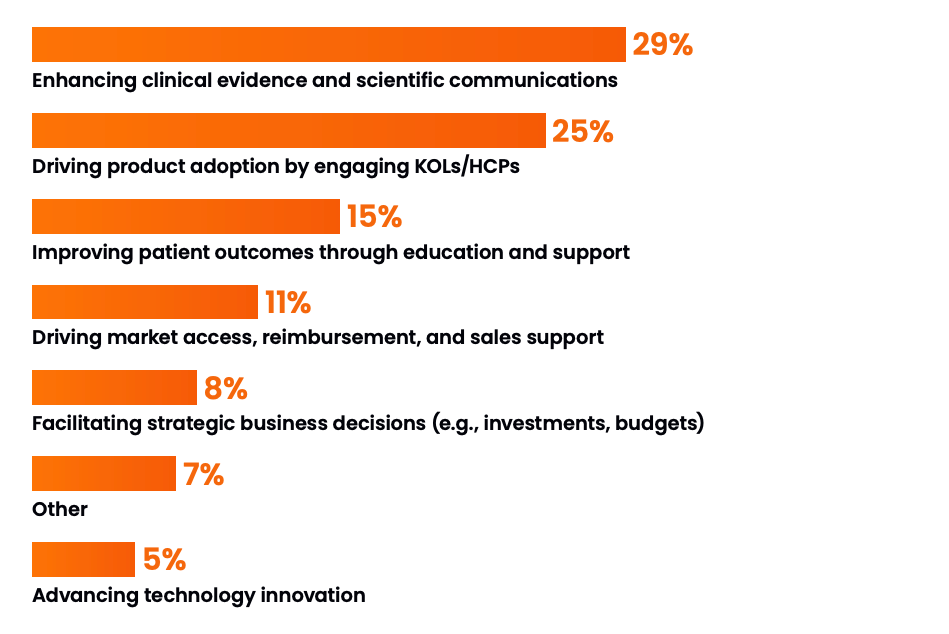
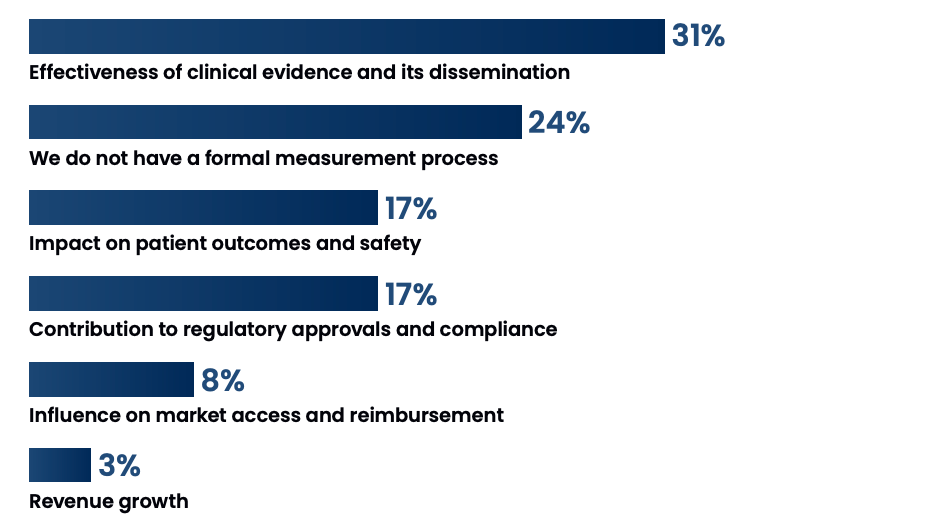
Results show organizations value medical affairs work, especially when it comes to enhancing clinical evidence and driving product adoption/awareness. This value is also reflected in how the organization tracks success with evidence dissemination cited as the top performance metric.
Where do you see the most significant impact of the medical affairs function in your organization?
However, clinical evidence dissemination leads as the primary metric by only a slim margin over having no formal measurements in place. This reveals a critical gap: even when medical affairs influences a variety of outcomes, many organizations remain unable to quantify or demonstrate that contribution.
What is the top way your organization measures medical affairs impact?
Priorities and Challenges for Growth
Challenges to building an effective medical affairs department
Medical leaders cited strategic influence and visibility as their biggest challenge, followed closely by securing resources and budget.
What are the biggest challenges in building an effective medical affairs department?
|
#1
|
Strategic influence and visibility in the organization |
|
#2
|
Securing sufficient resources and budget |
|
#3
|
Clear roles, responsibilities, and governance |
|
#4
|
Recruiting and retaining top talent |
|
#5
|
Building strong external relationships and fostering trust |
Key elements to accelerate medical affairs growth
Medtech leaders look to accelerate growth by deepening clinical understanding and broadening scientific influence—prioritizing stronger evidence generation, scientific communication, and KOL and HCP engagement.
Which elements of the medical affairs function are most important to accelerate growth?
|
#1
|
Strengthening evidence generation and real-world data initiatives |
|
#2
|
Expanding scientific communication and engaging KOLs & HCPs |
|
#3
|
Enhancing cross-functional collaboration (R&D, commercial, regulatory) |
|
#4
|
Hiring the right people and fostering talent development |
|
#5
|
Investing in digital tools and data analytics |
Collaboration and the Digital Ecosystem
Digital ecosystems
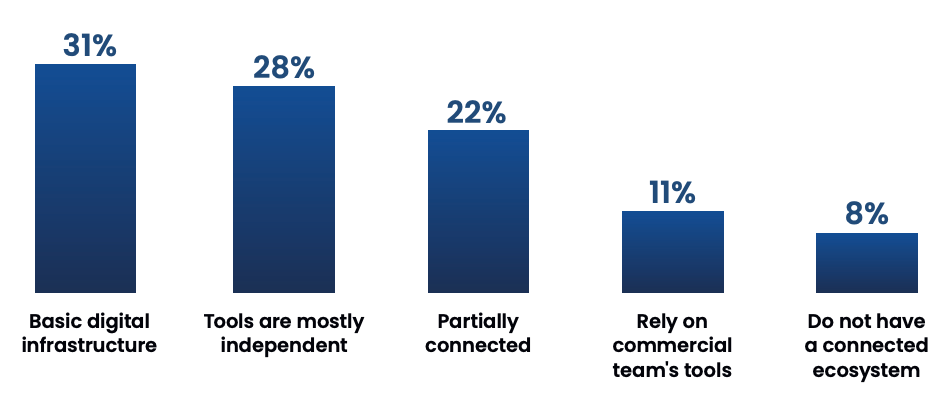
A majority of medical leaders describe their digital landscape as highly siloed between teams—relying on separate platforms for data collection, content management, and stakeholder engagement.
How would you describe your organization’s connected medical affairs digital ecosystem?
Collaboration
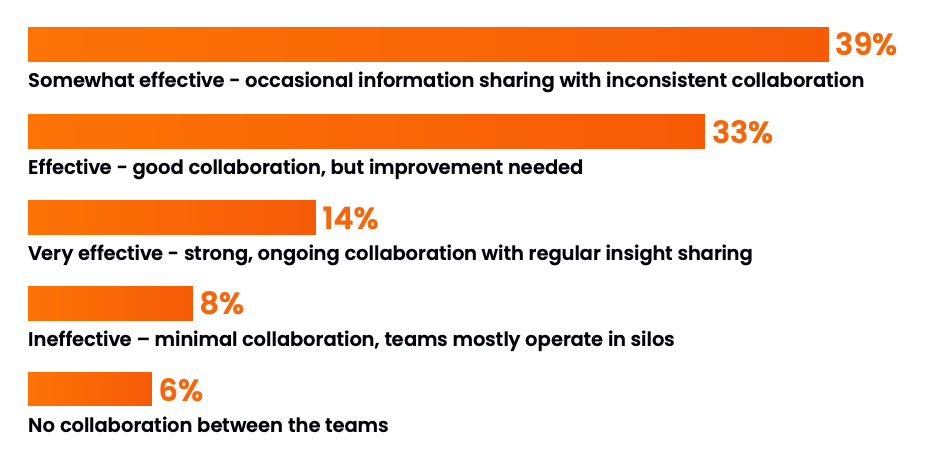
While the majority of medical affairs organizations collaborate with commercial teams on a basic level, they struggle to achieve highly effective, synchronized teamwork.
How effective is collaboration between your medical affairs and commercial teams for field activities?
Key Takeaways
To overcome budget and resource constraints, medtech medical affairs leaders are focused on elevating their strategic influence and visibility across the organization. Setting mindful metrics and investing in digital ecosystems will help the function clearly demonstrate and maximize impact.
Recommendations to close the strategic gap
|
1
Demonstrate business acumen
|
To solidify their position as a strategic partner, medical affairs teams must apply business acumen to their wide range of responsibilities. Understanding and having the ability to speak to their role in business objectives, and contribute alongside commercial and R&D counterparts, is critical to securing a greater seat at the table. |
|
2
Establish strategic metrics
|
Establishing and tracking metrics directly mapped to organization-level goals is necessary to gain influence and secure budget. Focusing exclusively on activity-level KPIs isolates medical affairs from strategic planning. In contrast, mapping metrics to business-level goals demonstrates ROI and value to the executive team. |
|
3
Invest in a connected digital ecosystem
|
Disconnected, siloed digital ecosystems lead to manual, time-consuming processes, and make collaboration difficult. By investing in digital solutions, medical affairs can closely track and map their activities to strategic objectives, free up resources to focus on high-impact priorities, and openly share insights with clinical and commercial counterparts—establishing medical as a more strategic partner. |
See how Veeva MedTech’s solutions can help transform your medical operations to drive organizational impact.