Press Release
Industrywide Survey Reveals Centralizing Regulatory is Number One Priority for Medtech
Growing need for visibility and speed driving shift to digital regulatory systems
PLEASANTON, CA — Feb. 28, 2023 — New research shows a majority of medtech organizations are taking action to advance regulatory affairs, according to the second annual Veeva MedTech Regulatory Benchmark Report. More than half of medtech companies say establishing a single source for regulatory information (62%) and implementing a global and centralized regulatory information management (RIM) system (51%) will be the industry’s top focus over the next two years. With the move to modernize RIM underway, medtech leaders are bringing together data, content, and systems for improved insights and time to market.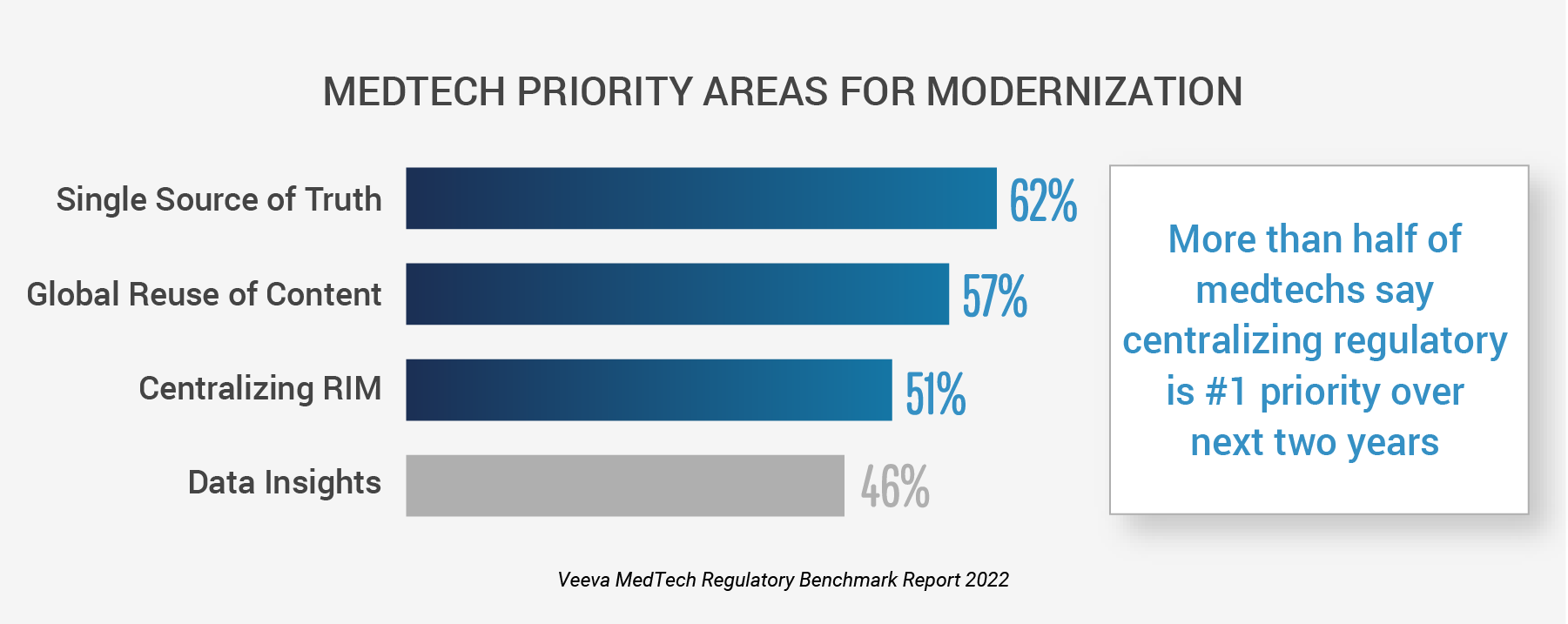 Data reveals an increased focus on digital systems to harmonize operations globally, with two out of every five companies already selecting digital regulatory technology. This shift toward digital RIM systems highlights the need for greater transparency and collaboration across regional teams to meet evolving regulations and change management requirements.
The report reveals positive changes to regulatory affairs and opportunities for improvement, including:
Data reveals an increased focus on digital systems to harmonize operations globally, with two out of every five companies already selecting digital regulatory technology. This shift toward digital RIM systems highlights the need for greater transparency and collaboration across regional teams to meet evolving regulations and change management requirements.
The report reveals positive changes to regulatory affairs and opportunities for improvement, including:
- Manual processes still linger: Just 13% of companies have implemented a global digital RIM system for end-to-end management of regulatory operations. Many medtech organizations rely on manual processes, disconnected data sources, and siloed systems that aren’t scalable, making it harder to expand into new markets.
- Single source for registration data trends upward: Companies who collect global registration data in a single system increased year-over-year, highlighting urgency for establishing one source for regulatory information.
- Post-market compliance processes lack connections: Most companies (83%) have partial integrations, point solutions, or manual processes across regulatory and quality to capture post-market changes within the product portfolio. The lack of a seamless and automated change control process increases risks and can lead to compliance issues or delays.