
Building Smarter GTM Models: Data Integration, AI, and Execution Excellence
Jan 06, 2026 | Sushant Aggarwal, Principal Business Consultant, APAC
Jan 06, 2026 | Sushant Aggarwal, Principal Business Consultant, APAC
Go-to-market (GTM) models in biopharma are evolving faster than ever. HCP Personalization, omnichannel, and artificial intelligence (AI)-assisted decision-making are feeding more into commercial pharma workflows. Given the fast pace of evolution in commercial pharma, how can we develop strategies that leverage this evolution to drive competitive advantage.
At the recent Veeva Summits, I hosted Cameron Dimech, Head of Business Insights, GSK Australia, and Jin Lee, Director of Commercial Operations at MSD APAC, in Sydney and Singapore, respectively. Together, we explored how the pharma commercial model is shifting from a one-size-fits-all approach to a dynamic, data-optimized GTM strategy.
Why Biopharma GTM is Shifting
This shift is driven by two forces: evolving healthcare provider (HCP) expectations for timely, personalized information, and growing pressure on biopharma companies to deliver better HCP experiences and patient outcomes while optimizing spend in a competitive landscape.
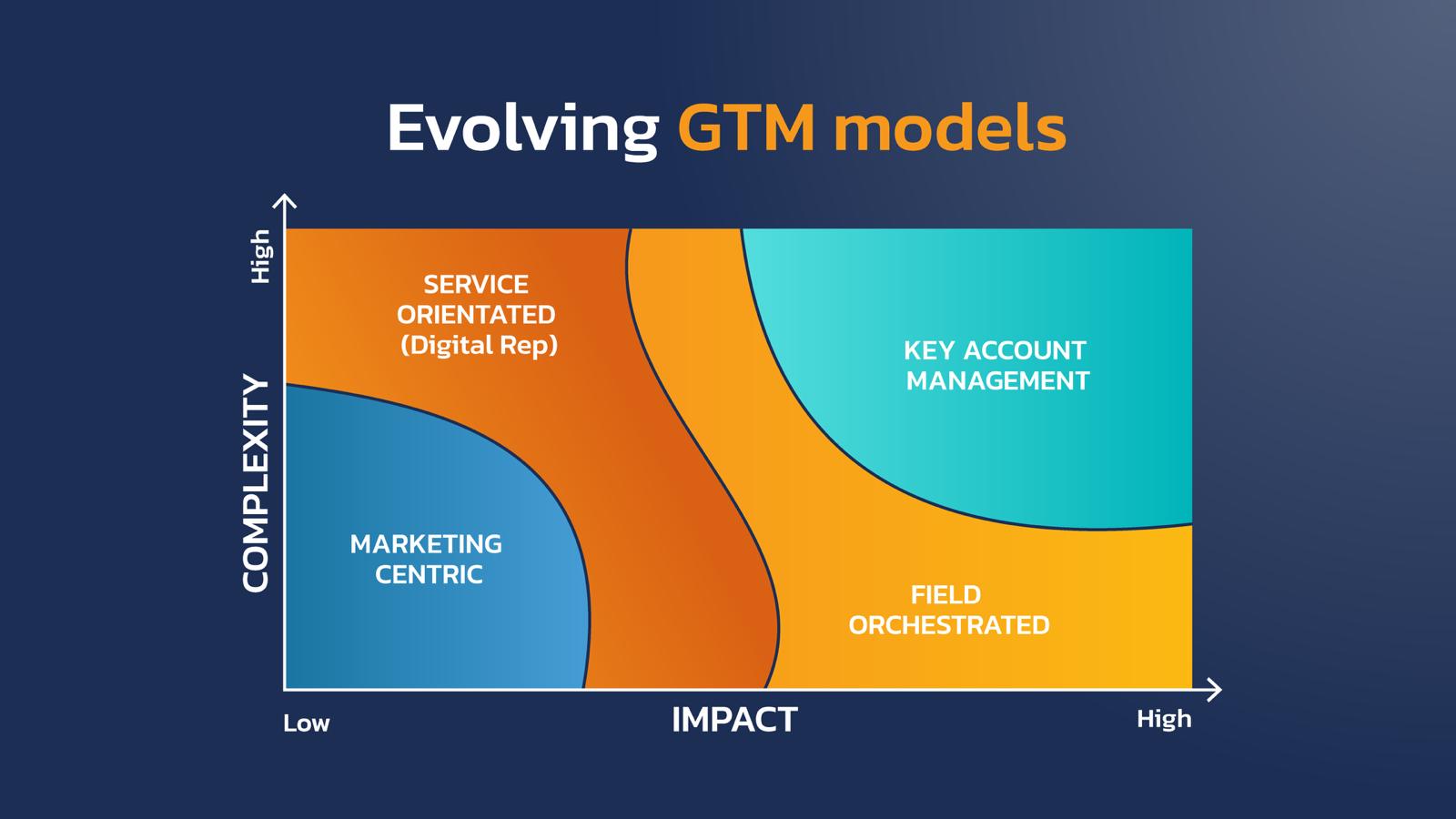
As a result, the industry is experimenting with several GTM approaches, each suited to different areas, customer needs, and brand life-stages:
- Marketing-centric: automated email engagement, which is low in complexity, personalization, and impact
- Service-oriented (“digital rep”): two-way digital engagement which has moderate to high complexity and impact
- Field-orchestrated: traditional face-to-face meet-ups, which is low in complexity but highly impactful (and hence commercial pharma has been using this for decades)
- Key account management: complex, but often yields high impact for strategic accounts
There is no single “best” model, as the best approach depends on factors like HCP needs, where a complex therapeutic area like oncology would demand a different approach from general medicine. Another factor is brand life-stage, where the launch of a key product requires a safe, high-impact model, and a post-LOE (Loss of Exclusivity) brand might prioritize cost-effective brand recall. There are other factors as well that determine the right GTM approach, but most pharma companies deploy a mix of GTM models. Some leading pharma companies are deploying all four GTM models to engage HCPs, based on HCP preferences and behaviors.
The Data Foundation: From Abstract to Actionable
A strategy is only as good as the data that fuels it, according to MSD’s Jin Lee. He explained that data exists in organizations, but integrating and applying it to drive execution remains the biggest bottleneck.
For example, the data may be outdated and inconsistent, resulting in a heavy reliance on sales representatives (reps) to manually profile and validate customers. In addition, the GTM approach requires pulling together many different data sources, whether external or internal company data. In turn, this data must feed into many processes, such as segmentation, targeting, and commercial execution.
“We have good quality data, but how do we marry it with execution? How do we use all these data points to drive execution?” said Jin Lee.
AI's Role in Sales Evolution
The discussion with Jin Lee turned to how AI may reshape field engagements. While AI and data will enhance decision-making and process optimization, Jin Lee suggested that reps will remain valuable for connecting with HCPs and orchestrating GTM execution.
“Reps still play a critical role because AI can only act on the data it’s given, and that data still needs human judgment,” said Jin Lee. Currently, a significant amount of time is needed to validate customer profiles, flag suspicious data, and spot data outliers before a GTM approach can be taken.
Today, teams can rely on a tool called Veeva MyInsights Studio (MIS) to centralize HCP data and improve efficiency. Jin Lee expects that AI will soon transform analytics from traditional dashboards to conversational, human-like interactions.
As AI evolves and can take hundreds of key performance indicators (KPIs) and summarize them into a few clear action points for reps, Jin Lee expects a future where reps will not be looking at dashboards. Instead, they may ask AI (similar to interactions with virtual assistants such as Siri): “I’m meeting Dr David, what should I discuss?” and the AI will summarize all the relevant data with a clear, human-like explanation.
Yet, even as AI tools and data quality improve, Jin Lee remains confident that reps will remain essential because they maintain real relationships and connections with HCPs, and execution still depends on human capability.
Why Execution Still Fails
When considering why even the most data-rich plans often fail to translate into flawless execution in the field, Cameron Dimech, from GSK, suggests that the need is to move to a scientific, customer-centric approach.
The industry has also moved from “static models to dynamic models,” noted Cameron, where data continuously feeds into the system, enabling real-time adjustments. These advances provide unprecedented visibility into prescriber behavior, adoption patterns, and channel performance. However, the model is only as strong as the humans who use it.
“We’re chasing the perfect model, but the human aspect of applying those models is the critical difference between getting something meaningful and building something that looks impressive but doesn’t change the customer experience,” said Cameron.
Ultimately, the future of biopharma GTM will not be shaped by algorithms alone, but by combining data science with human intelligence. The systems that generate the most impactful outcomes for customers will be those that are data-rich, enable human-centered inputs, and are built to engage and learn from those responsible for customer interactions.
Click here to learn how Veeva Access helps you understand HCPs better.