
Effective Planning and Engagement for Patient Support Services
Sep 23, 2026 | Ryan Donk
Sep 23, 2026 | Ryan Donk
As individualized therapies grow more complex, personalized care takes on new meaning. Biopharmas have a window of opportunity to build world-class patient support programs (PSPs) that serve the entire ecosystem — from patients and caregivers learning to navigate specialized treatments, to healthcare professionals (HCPs) facing steep clinical learning curves and reimbursement challenges.
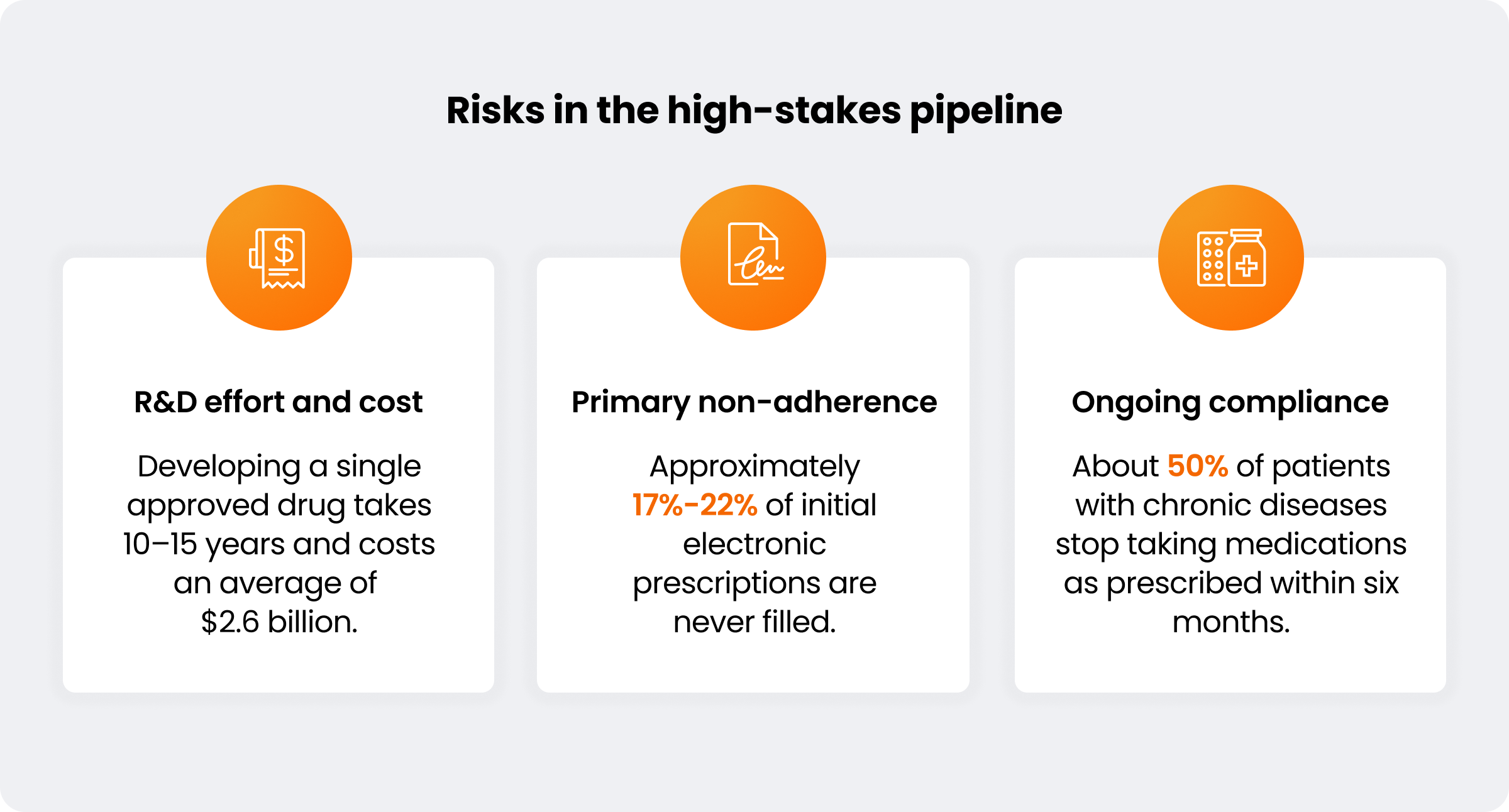
The stakes are high, as the regulated product development and commercialization life cycle in biopharma now averages 10-15 years and costs billions per therapy. Market success and clinical outcomes hinge on companies’ ability to coordinate wide-ranging services that help patients access and adhere to therapy throughout their treatment journey. But simplified patient support and improved outcomes are within reach.
“With Vault Patient CRM, we have a unified patient support ecosystem to support physicians, patients, families, and caregivers throughout the entire patient journey,” — Tom D’Amato, Senior Director, Patient Services and Patient Advocacy, Immedica
By using AI and other technology innovations in Veeva Vault Patient CRM, companies like Immedica are reclaiming ownership of patient journey navigation. As Tom D’Amato, senior director of patient services at Immedica, notes, this unified ecosystem supports the entire care team. Modernizing the process requires taking these foundational steps:
Step 1: Optimize the PSP operating model for hybrid services
The strategic role of PSPs in biopharma is evolving as patients’ digital and personalization expectations change. Patients and providers need ongoing support for complex and costly medicines, often for chronic conditions requiring lifelong adherence.
To better control and coordinate patient support, biopharmas are bringing data and technology in-house while filling resource gaps to decrease reliance on third-party services. A recent survey of biopharma leaders found that 63% use a hybrid model of insourced and outsourced services, relying on hub providers for various functions such as nurse or case manager staffing and PSP enrollment.
Regardless of which model is in use, challenges such as suboptimal data ownership and access, overly complex technology integrations, and a decreased level of control over patient experience and program management can persist. Inefficiencies and disconnected resources force teams to waste time seeking information rather than collaborating and serving patients.
For example, in fully outsourced models, the hub ‘owns’ relationships with patients and HCPs, and biopharmas await data transfers and transaction feeds, often on a delay. Hybrid or insourced models may rely on disconnected point solutions or complex custom solutions that are difficult and costly to maintain. As a result, it’s essential to select technology partners with a strong track record in the industry and create a flexible foundation capable of scaling with the evolving needs of patients and the business.
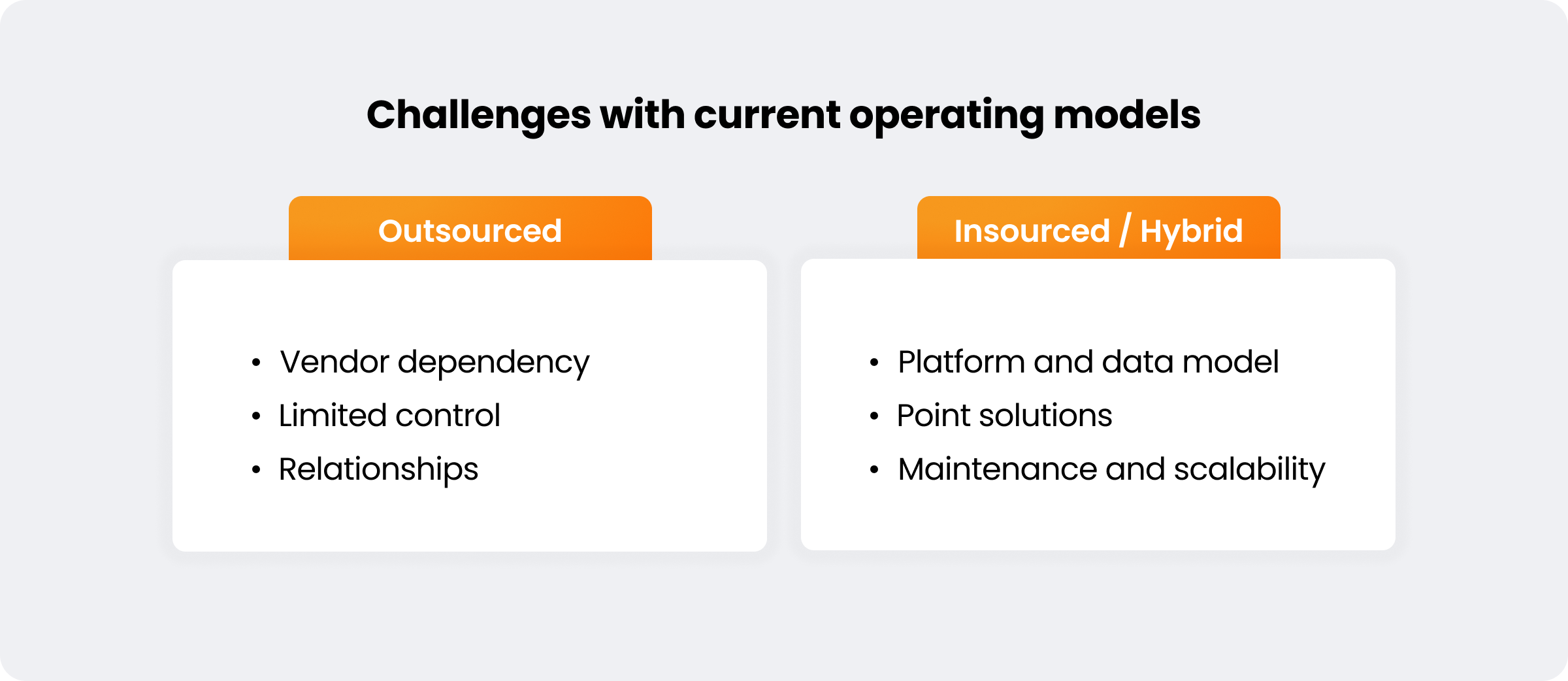
Assessing whether the right operating model is in use, as shown above, is critical to improving the patient experience and ensuring consistent support during phases when a patient needs the most guidance. The right model — paired with innovative technology and agentic AI that automates routine tasks — positions teams to exceed patients’ expectations while maximizing resources and preparing for growth.
Step 2: Leverage Patient CRM to support flexible teams
PSP strategies are unique to each biopharma, but the core capabilities needed to execute on patient journey navigation, continuous engagement, and connected data are universal.
Veeva Vault Patient CRM checks those boxes while ensuring patient data is secure and boosting productivity by coordinating workflows and handoffs more efficiently across patient support and reimbursement teams. Teams can now:
- Engage patients and prescribers faster across inbound and outbound channels
- Access comprehensive, deep, real-time data
- Operate in therapy-specific workflows across patient support and reimbursement teams
- Be confident in knowing patient data is protected and secure
Beyond productivity, Patient CRM effectively mitigates risk. With HIPAA violation costs reaching $2 million annually per category, technical safeguards like access control, audit trails, and consent management are essential.
Step 3: Increase productivity by optimizing roles
PSP stakeholders define success differently, so optimization should take into account their priorities by role. This might look as follows:
Business team goals
- Achieving sustainable growth and reaching reimbursement targets
- Mitigating risk and ensuring compliance
- Reducing time-to-therapy
- Maximizing team impact through intelligent automation
How to optimize: Implement IT- and business-friendly tools with compliance and risk mitigation automation and AI natively built into the CRM.
IT team goals
- Enabling cross-functional collaboration
- Mitigating risk and ensuring compliance
- Maintaining fewer integrations
- Finding trusted technology partners
How to optimize: Defragment solutions and data, enabling teams to collaborate efficiently on a compliant, industry-specific platform.
Marketing team goals
- Developing marketing strategies that align with brand and PSP goals
- Directly contributing to patient services goals
- Positively impacting brand performance
- Achieving sustainable business growth
How to optimize: Support the development of timely, patient-facing messaging and materials. Supply digital tools for personalization at scale and demonstration of clear ROI for patient engagement.
Innovation drives excellence in patient engagement
More complex therapies, increased competition, and internal pressure to do more with less are driving companies to evolve their patient support and engagement models. Effective PSP execution not only benefits patients, but helps HCPs and biopharmas achieve their mission to reach more patients with viable treatment options and improve lives.
Assess where you are today and set a clear path forward, with technology and process optimization for patient support.
Hear Immedica leaders describe how they are transforming the patient experience.