
eBook
Making AI Work Well for the Life Sciences Industry: An Agency Perspective
Agencies are critical to helping marketing teams deliver high-quality content rapidly. Their role is evolving as they determine the best ways for AI technology to augment the process, while also ensuring that creativity and brand-strategy alignment are not lost. So where do they see AI working well, and how are they changing to support the industry in the best ways possible?
AI use cases for promotional and medical content have continued to evolve — from performing quality checks before medical, legal, and regulatory (MLR) submission, to using generative AI for content creation and removing manual activity for claims management and scientific statements. Agencies have not only begun to advance their own AI capabilities, but are also leveraging technology partners to embed them in existing content processes. The new model requires work and change management.
Regardless, the goal is to efficiently deliver impactful content that helps healthcare professionals (HCPs) enable better patient outcomes. Veeva’s 750+ agency partners are certified on Veeva products to help our mutual customers get the most from their products. We asked six of our agency partners how it’s going.
"Marketers want to see powerful tools but are unsure of where to start. That’s where having the right partner is so critical.” JEREMY RICHTER EVP, Global Content and MLR Strategy, Publicis Production
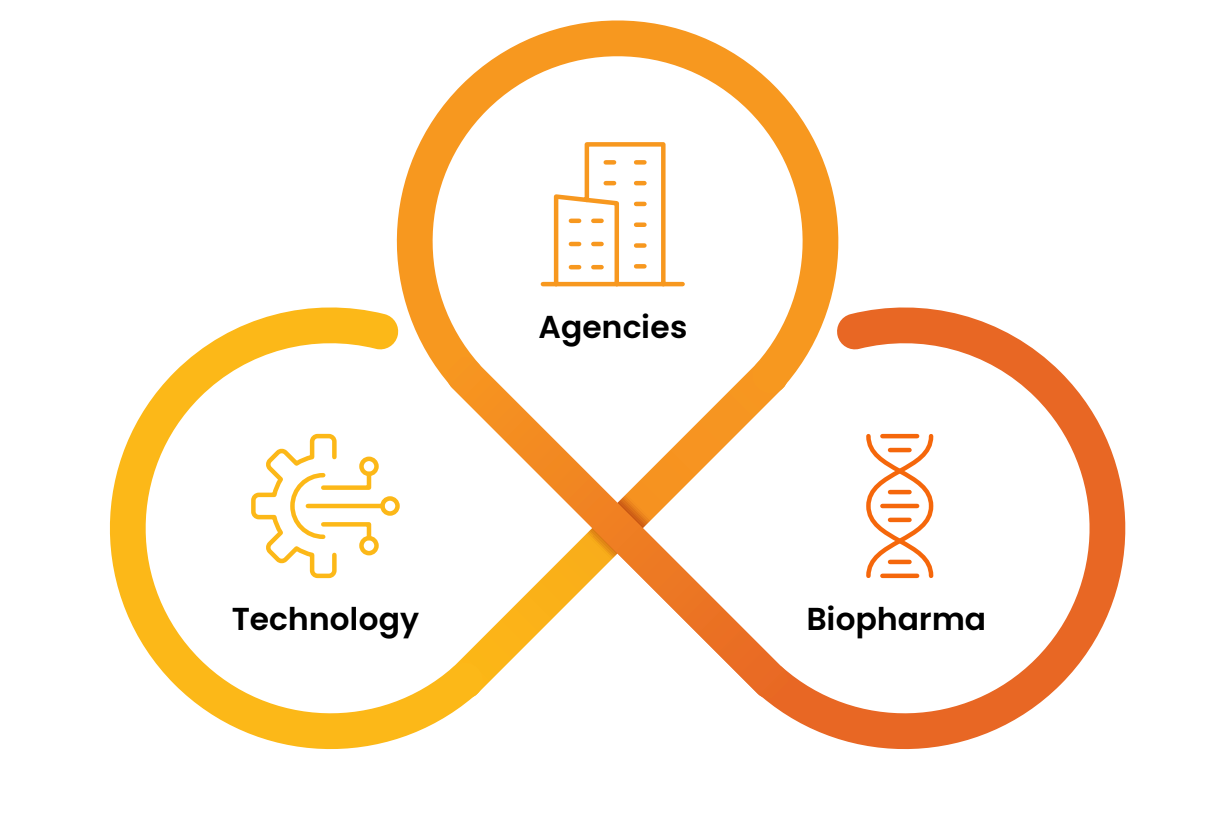
Establish a strong foundation to adopt and scale AI
Many biopharmas aren’t prepared to scale AI because they lack critical building blocks, leading to a costly disconnect between ambition and reality. “While clients request that we show them the powerful tools available, many are unsure of where to start. Having the right partner to help navigate the rapidly evolving landscape is so critical,” says Jeremy Richter, EVP, global content and MLR strategy, Publicis Production.
Agencies say that achieving scalable, sustainable AI outcomes is less about the novelty of the algorithm and more about mastering foundational elements that make any major technology program successful:
- Focus on the human side of the AI change
This includes upskilling the workforce or hiring for the expertise needed to maintain the tools, and managing fear or resistance with clear communication and training. Foster a culture where teams can experiment, accept failure as a part of learning, and use AI for small tasks as comfort builds. - Redesign the process for how work is done
Design process improvements with an understanding of how decisions impact day-to-day workflows, while keeping business goals in mind (e.g., efficiency, personalization). Establish consistent processes for data and content management to ensure AI runs on high-quality, trusted data. - Select the right tools and build a scalable environment
Invest in an infrastructure capable of handling the scale across brands and markets. Favor integrated, embedded platform solutions over point solutions for speed, consistency, reduced technical debt, security and compliance, and streamlined deployment.
“Technology leaders like Veeva lead the way by building scalable AI solutions in existing workflows and by developing AI content tools, smarter governance, and seamless integrations,” says Lydia Jani, SVP, director of regulatory operations, Omnicom Health.
"Real impact from AI emerges when we build robust capabilities; short-term savings are a byproduct, not the goal.” ADAM HIRSCH EVP, Innovation and Transformation, Real Chemistry
AI is delivering value in content, at last
Most biopharmas are still figuring out where AI fits best. They may not have the teams, bandwidth, or basics yet, and that puts roles in flux. As Jani puts it, “We can all provide the most value to HCPs by staying agile, continuously thinking about how to work with AI and how it can help us as marketers, partners, and reviewers.”
Where do agencies recommend applying AI initially? It depends on company- and brand-specific factors — and whom you ask. To see ROI and maintain market share, Jane Wallach, VP of MLR submissions, Jacques Madison, recommends using the technology for mature brands where budgets aren’t as large, the content is tried-and-true, and major claims and medical statements are well-known.
Jani sees AI delivering early, noticeable efficiencies for some clients in pre-screening and summarizing feedback for MLR, and real-time dashboards to improve visibility of review status. “The next big thing for us will be advanced, personalized content creation and smarter compliance checks. We're adapting tools within regulations and ensuring the agency and client sides work in sync. Without synergy, the process is clunky,” she adds. Marcos Casanueva, managing partner, iDetailing Creatives, sees even seemingly simple AI-driven tasks constrained by contracts, copyright, and regulatory requirements. “That said, where AI has been adopted, I’ve seen only speed gains.” In his experience, use cases show impact for pre-screening content and predictive content recommendations.
Agencies also anticipate high potential for AI use in medical materials. Christen Nyarady, EVP of creative delivery and optimization, Omnicom Health, says, “AI tools synthesize medical content to deliver scientific statements that align with a product. When data changes at the last minute, a new scientific statement can be made and get into promotions faster.”
"I'm a believer that AI will positively transform jobs, not replace them. Within five years, I think we'll see simpler tasks become self-service so that we can focus on intelligent content that truly delivers impact.” JEREMY RICHTER EVP, Global Content and MLR Strategy, Publicis Production
How biopharmas help marketing and MLR teams own their tech stack
If AI success depends on executing well across people, processes, and technology, the people element may be the most challenging for biopharmas now. But shifts in skills, adoption attitudes, change management, and culture among MLR teams and marketers are underway.
And the innovation curve keeps accelerating. “We help marketers envision what’s possible with new technology, empowering them to take ownership of their tech stack — a shift from the traditional agency-led model,” says Adam Hirsch, EVP, innovation and transformation, Real Chemistry. When marketers deeply understand their technology, they strengthen engagement with MLR, field teams, and customers. “Marketers should own the technology, but for the longest time, agencies have,” he adds.
Wallach sees marketers becoming more engaged and asking questions. “They’re figuring out technologies along with agencies. She also sees increasing MLR participation in strategy, driven by technology. “Reviewers want to talk about what content will be submitted. Early MLR involvement and increased confidence in AI tools will ease the review process,” Wallach says.
As a result of AI, roles for the technology-savvy are increasing. Richter notices a rise in master service agreements containing AI clauses as companies seek partners who will accelerate their technology adoption curve.
Jani agrees, adding, “Creative teams are becoming more like strategists, with AI taking their directives — a concept likely to translate to other marketing functions.”
"Smarter governance through technology and integrations can speed up digital transformation without risking compliance.” LYDIA JANI SVP, Director of Regulatory Operations, Omnicom Health
AI accelerates content preparation steps and decision-support tasks, while compliance and final direction remain firmly human-led.
Agencies' takeaways for a thoughtful AI strategy
“Our approach to scaling AI centers on building lasting capabilities,” says Hirsch. “Success isn’t measured by volume or cost, but by how well we educate, engage, and support customers; quality always comes first.”
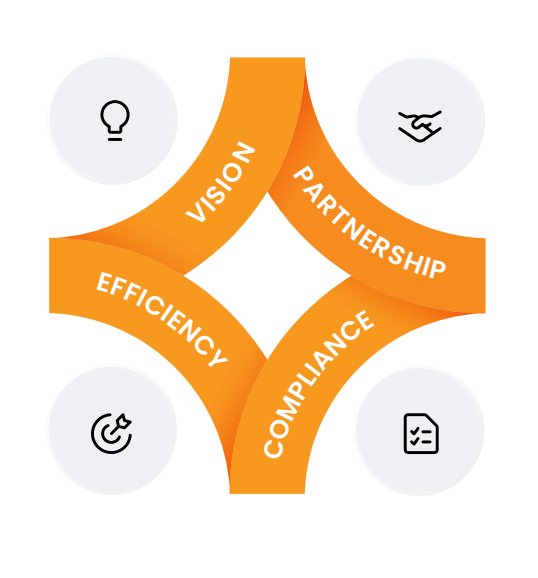
AI agents for pre-review — along with authoring tools and digital factories — promise productivity gains in orchestrating a more personalized content experience for HCPs. But agency partners stress the importance of maintaining the quality, robustness, and richness of content. High-ROI AI and automation initiatives in an application supporting the full promotional content lifecycle will deliver on multiple fronts — quality, efficiency, compliance, ease of use — and win out as AI governance tightens.
With these tips, content teams can be selective when choosing AI tools, enabling a faster path to successfully scaling AI and delivering compliant content:- Stay focused on the objective to rapidly deliver impactful content
- Optimize process and technology basics before adding AI agents
- Seek ways to collaborate and innovate with agencies and technology partners
- Prioritize AI literacy among marketers and MLR
- Choose industry-specific AI agents to protect investments
As AI technologies advance, agencies are positioned to become more crucial than ever to the clients they serve. Their guidance, from the adoption to the maintenance of these tools in everyday workflows, will continue to support marketers in achieving greater strategic value from AI.
See agentic AI for content teams in a context-aware, conversational interface.