How Top Biopharma Commercial Teams are Driving Success with AI
Mar 09, 2026 | Ed Park
Mar 09, 2026 | Ed Park
AI is fundamentally changing life sciences, but the path to scaling AI initiatives is rarely a straight line. Research shows that 89% of biopharma companies are unable to scale more than half of their AI initiatives, and 67% have had to abandon projects entirely due to poor data quality.
At our Commercial Data & Analytics Forums in San Francisco and San Diego, we talked about ways biopharma organizations can bridge the gap between AI potential and proven ROI for commercialization. Here are the key takeaways.
1. Sustainable AI growth starts with a crawl phase
Many biopharmas are moving away from cost-savings hype toward a more disciplined ‘crawl phase.’ The focus is on resetting expectations, ensuring organizational alignment, selecting use cases more intentionally, and building a trustworthy, complete data foundation that will provide long-term value.
In the meantime, fragmented strategies and lack of trust still hinder AI projects.
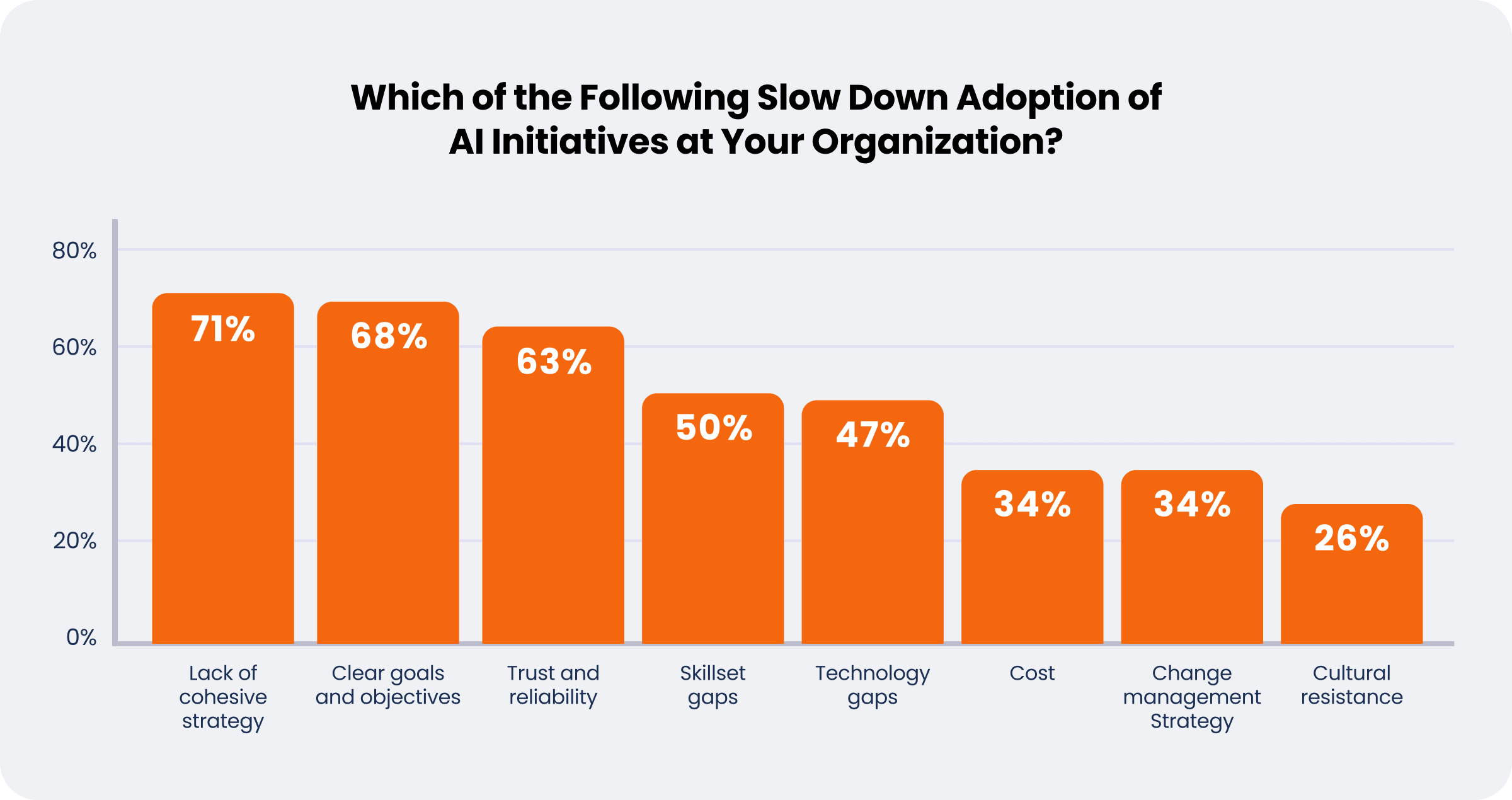
Organizations have identified several best practices for a successful crawl phase:
- Prioritize user needs: Focus on identifying exactly what teams on the ground need. Don’t start with overly complex or ambitious use cases.
- Define clear success metrics: Establish a clear vision for what success or failure for the initiative would look like. Be transparent in setting realistic expectations.
- Invest in integrated data: AI models deliver the strongest outputs when they are built on connected data systems.
- Unify the vision: Align goals into a cohesive vision that allows teams to prove value in specific areas before building further.
- Ensure data quality: Build a foundation of data that teams can trust. Reliable, high-quality data is non-negotiable for generating successful, reliable AI outputs.
Data quality directly drives the success of AI outputs, making a strong, trustworthy data foundation non-negotiable for scaling AI. As one attendee explains, “My priority is making us AI-ready. Data quality underlies everything.”
2. Strategic, targeted AI use cases deliver measurable results
Where is AI already working in biopharma today? There are numerous use cases where companies are seeing measurable impact and ROI:
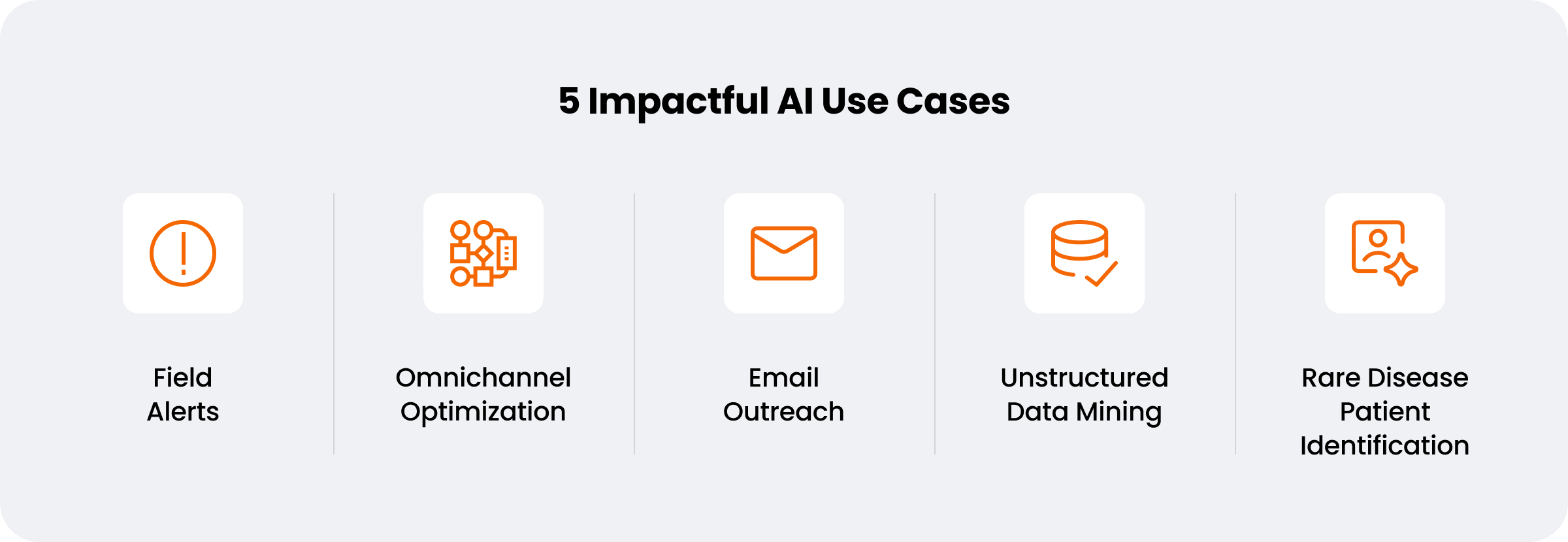
- Field alerts: Using AI and longitudinal data, a biopharma is optimizing where field reps spend their time, when to engage HCPs, and what to say. Field reps are now 3x to 7x more productive.
- Omnichannel optimization: One attendee describes AI-enhanced omnichannel capabilities as the most compelling AI use case for commercial success.
- Email outreach: A biopharma leverages an AI model to customize messaging for better email targeting and to time email sends to an hour before that HCP’s average open time. Their email open rates increased from 8% to 32%.
- Unstructured data mining: Mining CRM, EHR, and other unstructured data sources helps companies identify churn and safety trends, such as adverse events, that were previously hidden.
- Rare disease patient identification: Using AI to analyze longitudinal data is proving highly effective, enabling biopharmas to find likely undiagnosed patients and the HCPs working with them.
By focusing on practical, high-value use cases first, organizations can build the skills and internal buy-in needed to tackle more complex AI initiatives in the future.
3. Bridge the gap between people, process, and AI tools
While high-impact use cases demonstrate the technology is ready, the success of any AI initiative ultimately depends on how well users adopt it. We have to get buy-in from our teams from the beginning and lead them through the design, testing, and scaling of AI tools.
Forum attendees agree that change management is a priority.
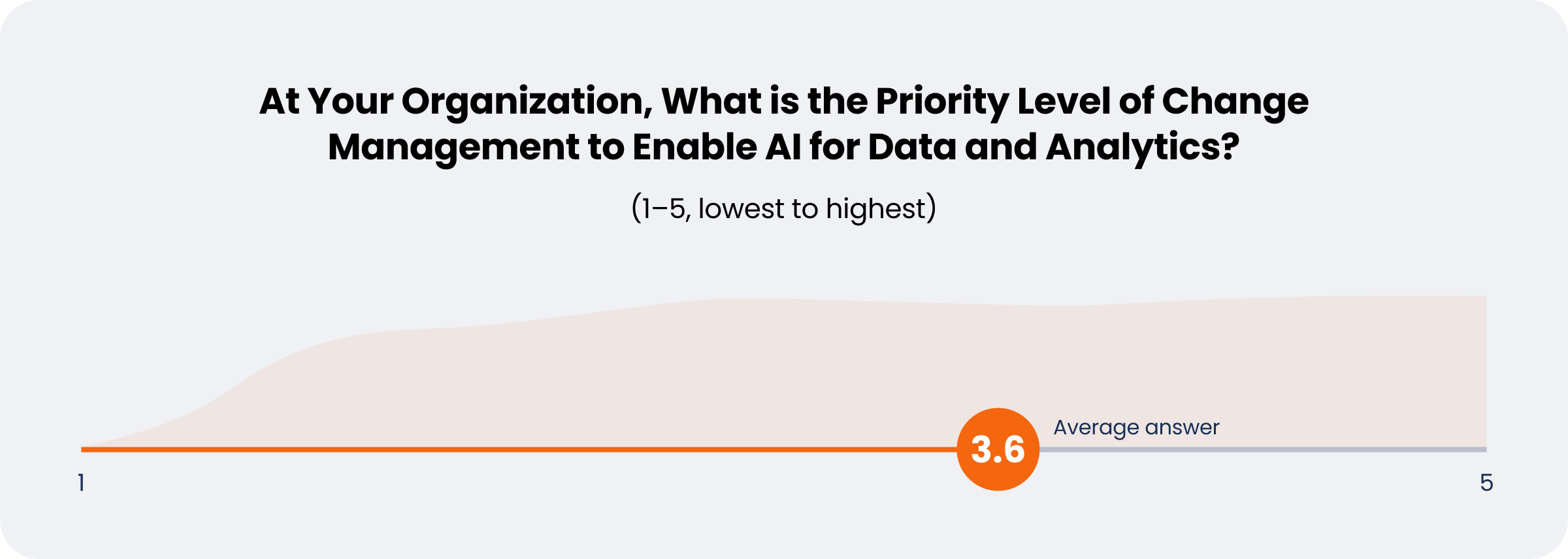
One biopharma company faced change management challenges with a patient discharge prediction model they built. The team wanted to understand and predict key events in the patient journey, but struggled with adoption. “The technology was there, but if we were to do it again, we’d need a clearer process and more training,” the attendee says. “And we’d need to show success stories early.”
Biopharma organizations are prioritizing five strategies for effective AI change management:
- Start simple: Deploy simple, secure agents first to build user trust.
- Prioritize bite-sized training: A biopharma shares 60 second training videos on how to leverage AI for day to day workflows. This approach helps with adoption, since almost everyone can spare one minute in their day to watch a training video.
- Identify the right early adopters: Select user segments like new sales reps who are already familiar with AI to secure intentional early wins. Finding the right initial advocates builds momentum for a broader rollout.
- Lead from the top: Set an example with clear directives and organizational alignment from top to bottom.
- Celebrate wins: Highlight specific wins on an ongoing basis to maintain momentum, demonstrate ROI, and secure budget for new initiatives.
Scaling AI requires a balanced focus on data readiness, high-value use cases, and people-first change management.
Watch a Field Alerts demo to learn how AI can leverage connected data to empower your field teams with timely, relevant insights.