Fragmented Data Is Holding Back
Biopharma Launches
Learn how a connected data foundation can address the top launch challenges identified by 125 life sciences leaders.
The challenge: Leveraging data to drive action
Around 34% of new product launches in the U.S. fail to meet forecasts. Teams are asked to launch with fewer resources (and often on tighter timelines) while expectations remain high. This leaves pre-launch brands with a vital question: What’s missing to ensure launch success, and how do we bridge the gap?
The right data foundation is the cornerstone of a successful product launch. But when that data sits in silos, its impact is limited. The true value of commercial data lies in how quickly it can generate accurate, relevant HCP and patient insights that drive meaningful action for field teams — the data to action pipeline.
AI has the potential to accelerate that pipeline significantly. AI-powered analytics can help teams overcome resource constraints and move faster to meet forecasts. However, the ROI of AI initiatives so far is mixed. Finding ways to increase its impact is a major priority for the industry.
This report draws on insights from a Veeva survey of 125 senior U.S. life science leaders from both emerging biotechs and large biopharmas.
Read on to explore how a connected data foundation powers launch success by enabling AI initiatives and accelerating insights for field teams.
Who we surveyed
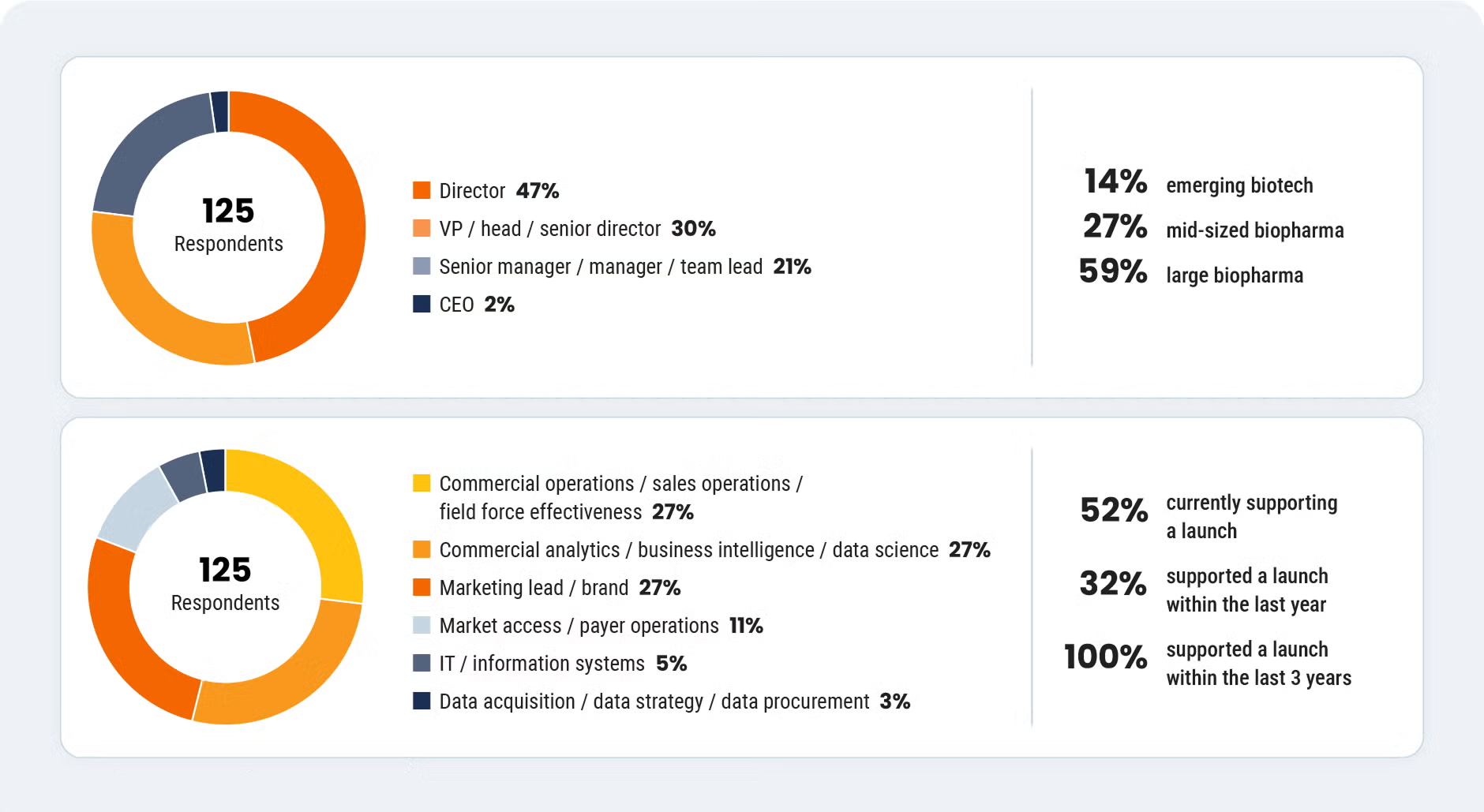
The state of biopharma launches
Top launch challenges
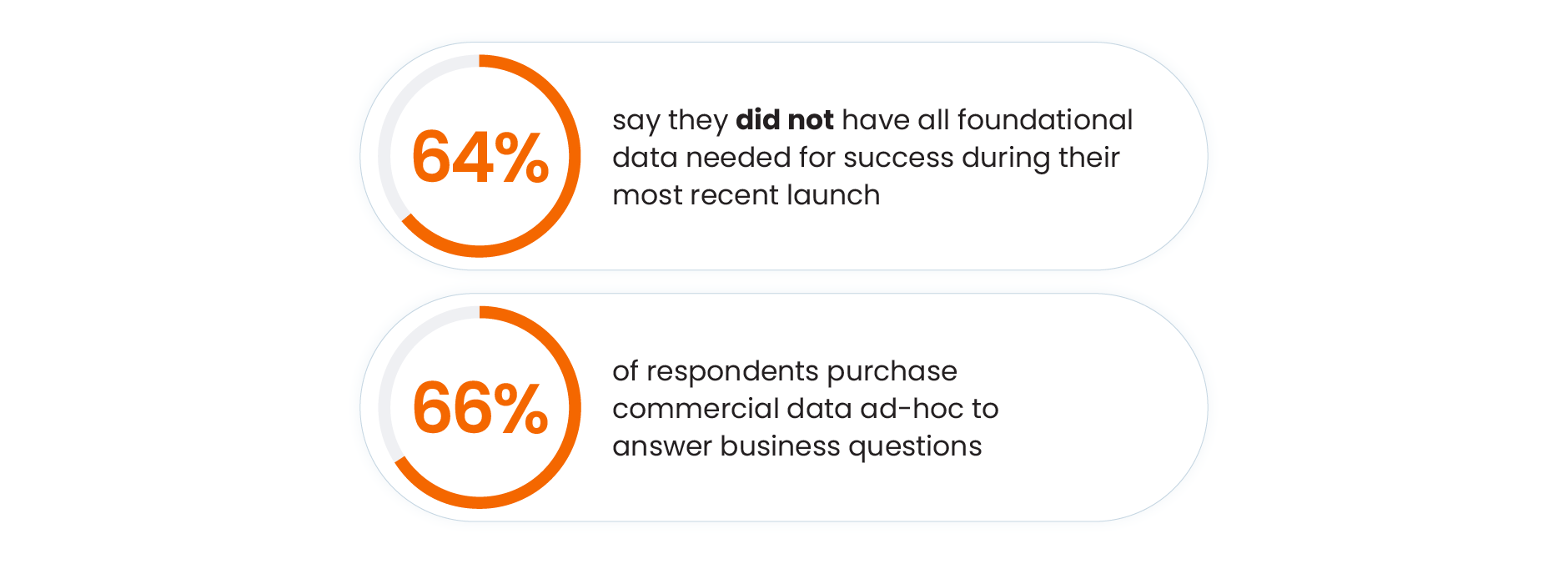
The survey reveals that the industry’s current approach to data leaves leaders ill-equipped to answer key business questions for launch.
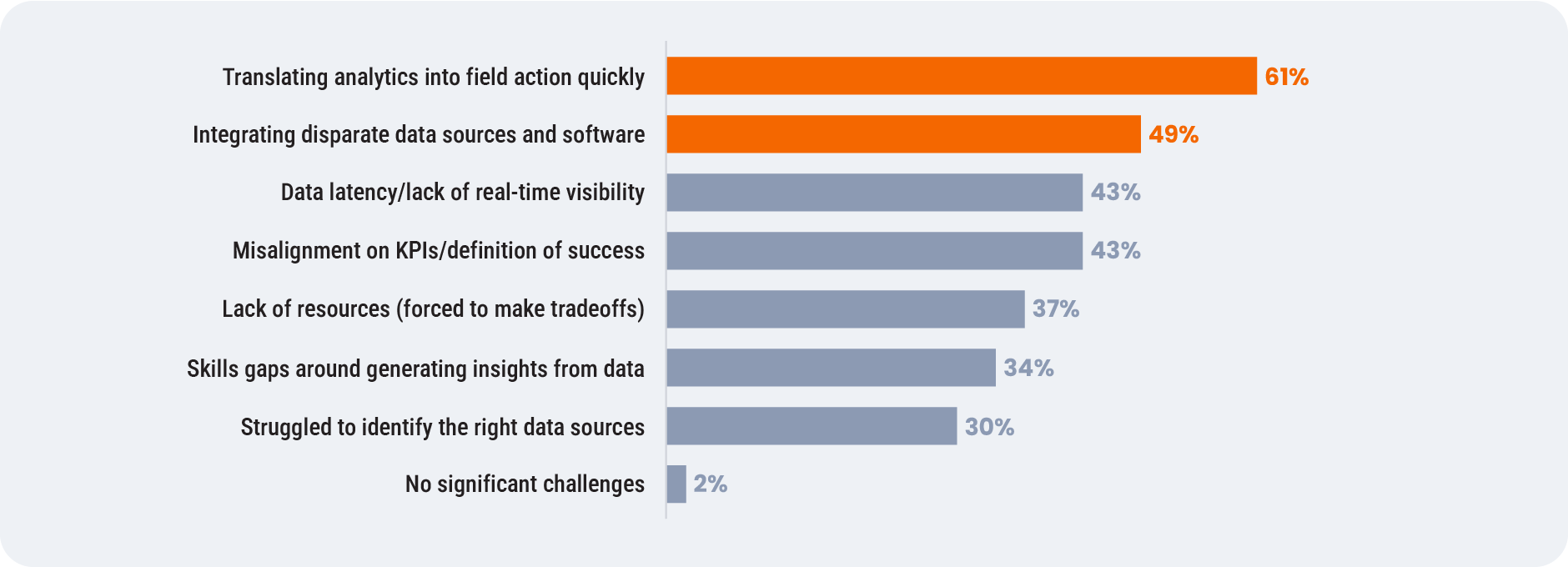
Leaders identify the key data roadblocks faced during their most recent launch. The top two challenges are accelerating field activation and integrating data. These remain consistent across company size, job function, and role level — highlighting the importance of solving these challenges to improve the chances of meeting forecasts.
What launch data challenges did you experience during your most recent launch?
Fragmented data creates launch challenges

Integrating disparate data sources and applications is one of the top challenges in the industry. It’s an even greater concern for emerging biotechs (<500 employees), but remains a launch challenge across organizations of all sizes:

Integrating multiple data sources requires significant manual effort
How much manual effort is required to integrate data across your data sources?
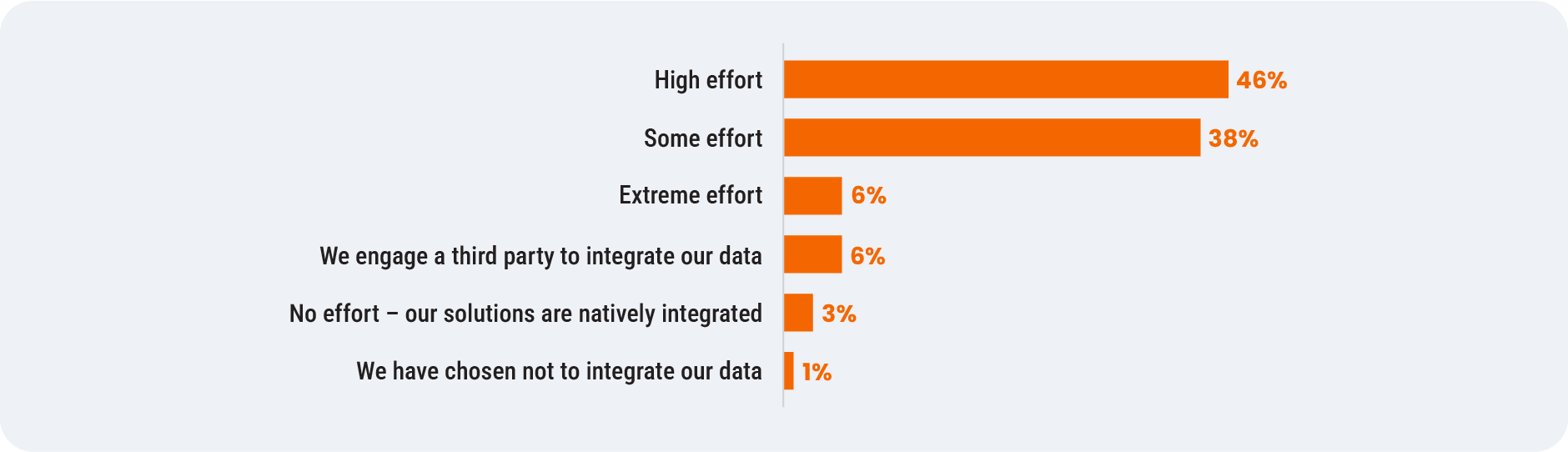
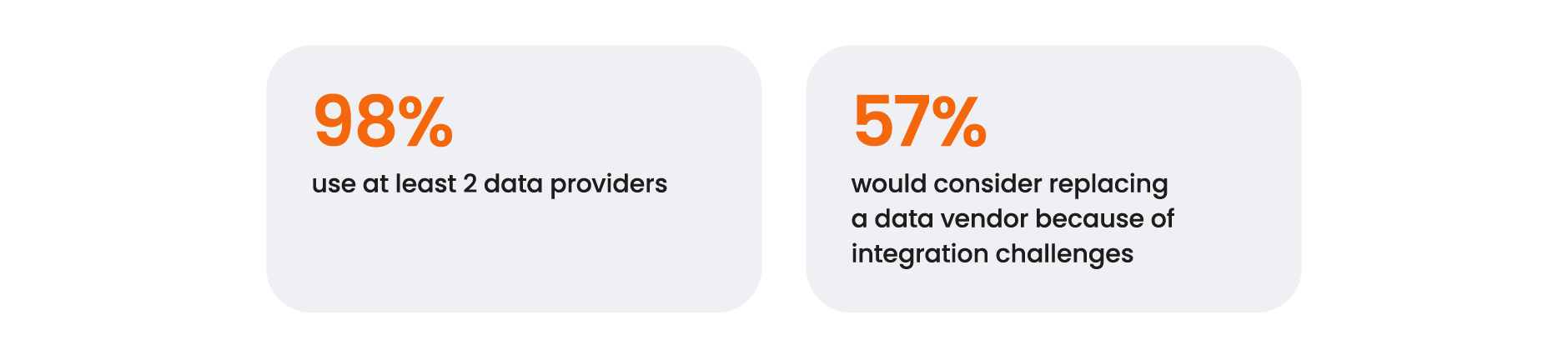
The survey data shows that using just one data provider is exceedingly rare. In addition, most brands are investing significant effort into integrating data:
The data to action pipeline relies on connected data
Today, many brands are trying to make do with legacy data sets that aren’t fit for purpose. Selecting the right data — integrated, accurate, and harmonized — is key for solving launch challenges across multiple use cases.
For example, an organization that wants to leverage AI to improve and customize outreach to healthcare professionals (HCPs) should employ:
- Claims data to see prescriptions and in-office administrations
- Records of the HCP’s recent scientific activities
- Relevant approved medical content for field teams
- HCP-preferred channels of communication
- Affiliations information
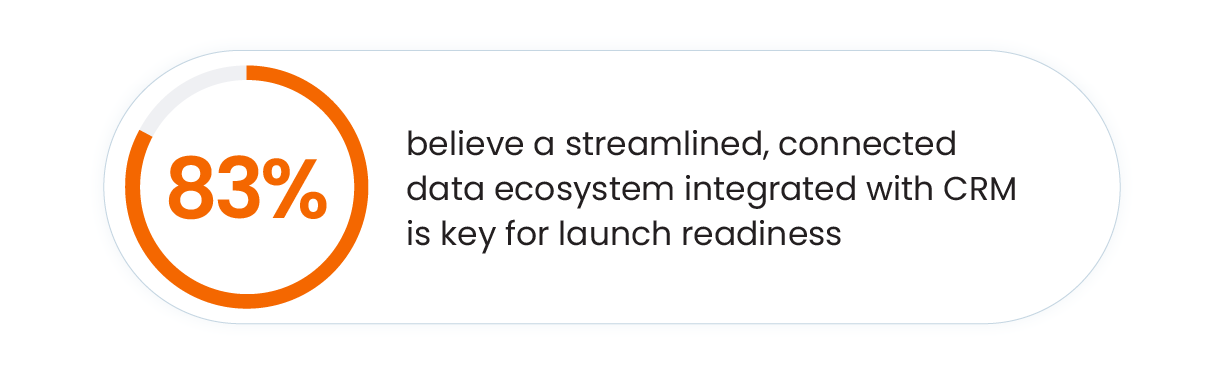
The speed and effectiveness of the AI initiative depends on how easily up-to-date information from all of these data sources can be combined to generate insights and deliver them to the right endpoint (e.g., CRM). Survey respondents agree that integrating data and applications is critical:
A truly connected data foundation — where all available data sources feed analytics, field insights, and AI without handoffs or delays — enables biopharmas to implement AI effectively across workflows and successfully accelerate field activation.
Prioritizing real-time data integration into CRM earlier in the launch phase would reduce the lag time between data acquisition and field activation. Director, Commercial Analytics
How AI can drive launch success
Faced with resource and time constraints, commercial teams have an opportunity to explore new ways of improving launch outcomes and reducing costs using AI. However, AI adoption is still low across a large number of key use cases.
Top launch use cases for AI implementation
Does your organization leverage AI for any of the following launch use cases?
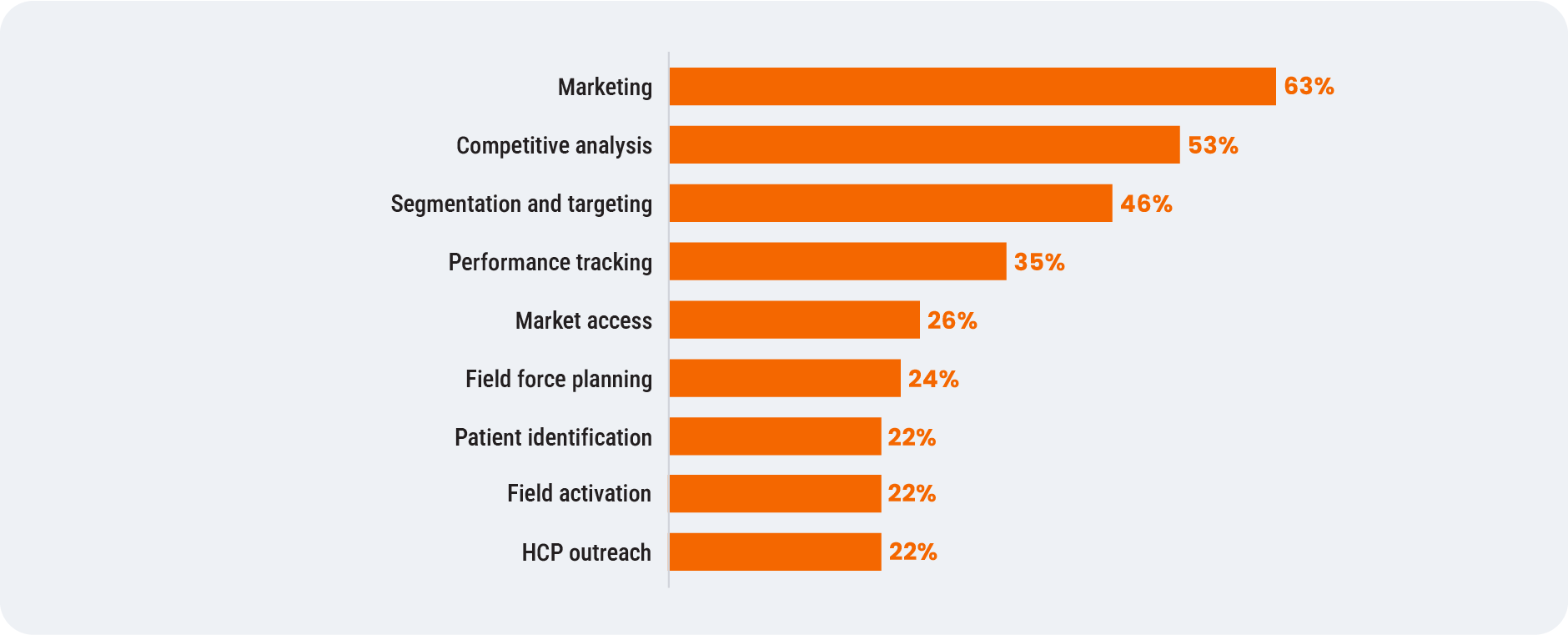
Many teams are finding value using AI for marketing and competitive analysis. But other use cases lag behind.
Today, AI initiatives are focused on use cases that are less reliant on connected data. Only some brands are leveraging AI for complex use cases like field activation and patient identification. Overall, many brands are hesitant to fully adopt AI due to existing data challenges:
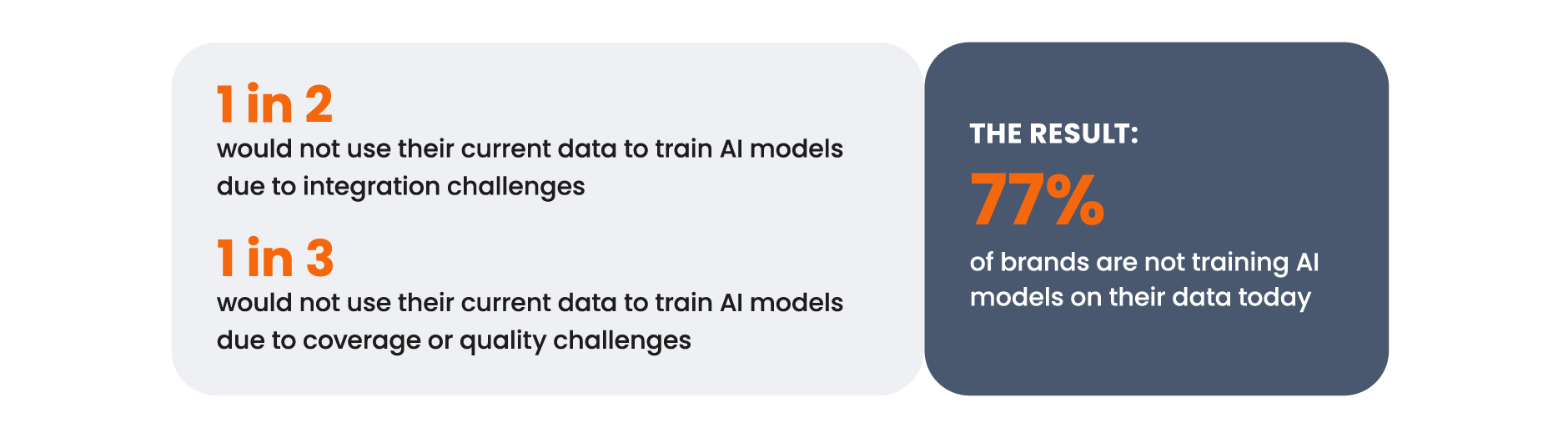
To understand the lack of AI use in some areas, it’s important to know what makes data AI-ready and where leaders feel their current data falls short.
Which components of a data solution are most critical to AI success in life sciences?
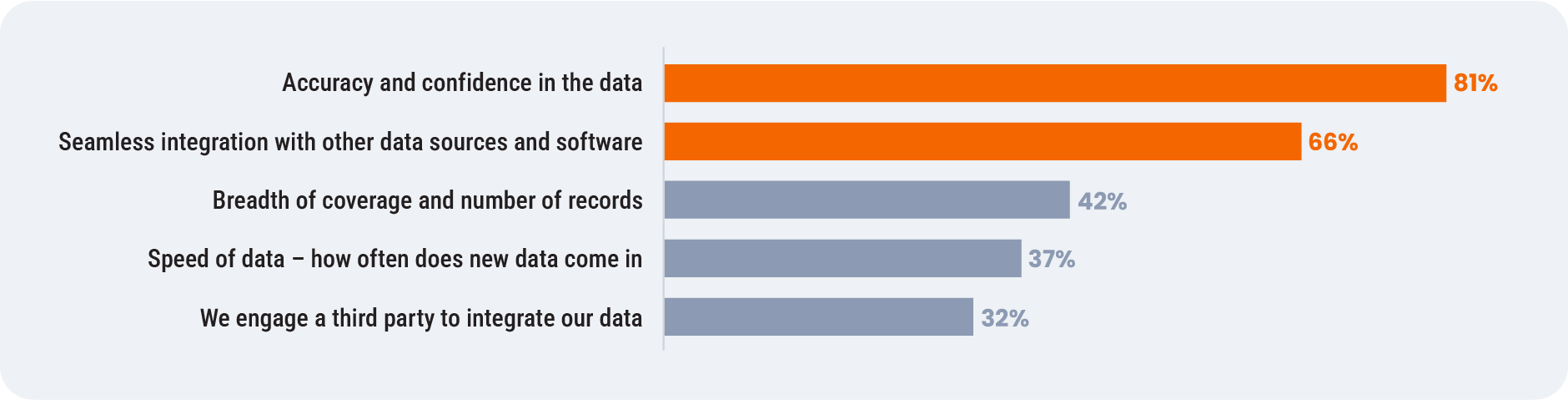
Concerns around data integration may help explain why companies are less likely to use AI for field activation and HCP outreach, which rely on integrating insights from multiple data sources. Integration often requires additional costs which many teams may feel isn’t worth the outlay to enable AI — but closing this gap is an important step toward making launches more efficient.
AI-ready organizations are more focused on integration
We compared the 22% of organizations that use AI for field activation to those that do not. The survey reveals that biopharmas leveraging AI are more likely to have a connected data foundation and, as a result, a slightly faster than average time to insight for the field. However, while there is a gap between the two groups, there is clearly significant room to grow.
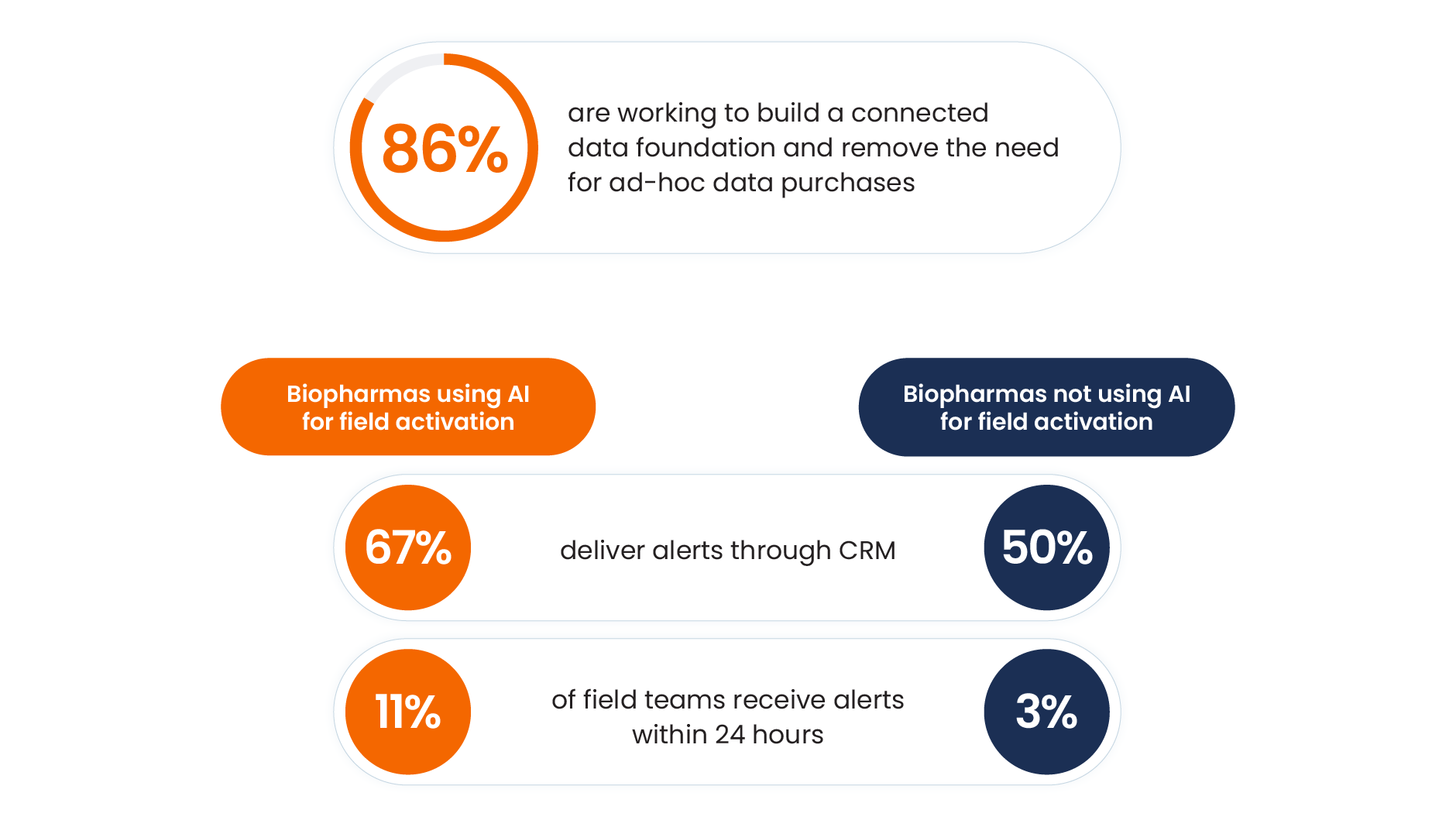
Even for those that are more advanced with AI, only 11% of field teams receive alerts within 24 hours. Furthermore, one-third of their field reps have to go outside of the CRM for alerts. This highlights the significant gap in integrated data and technology that still exists, slowing down field activation even at industry-leading organizations.
Solving the top challenge: accelerating field activation
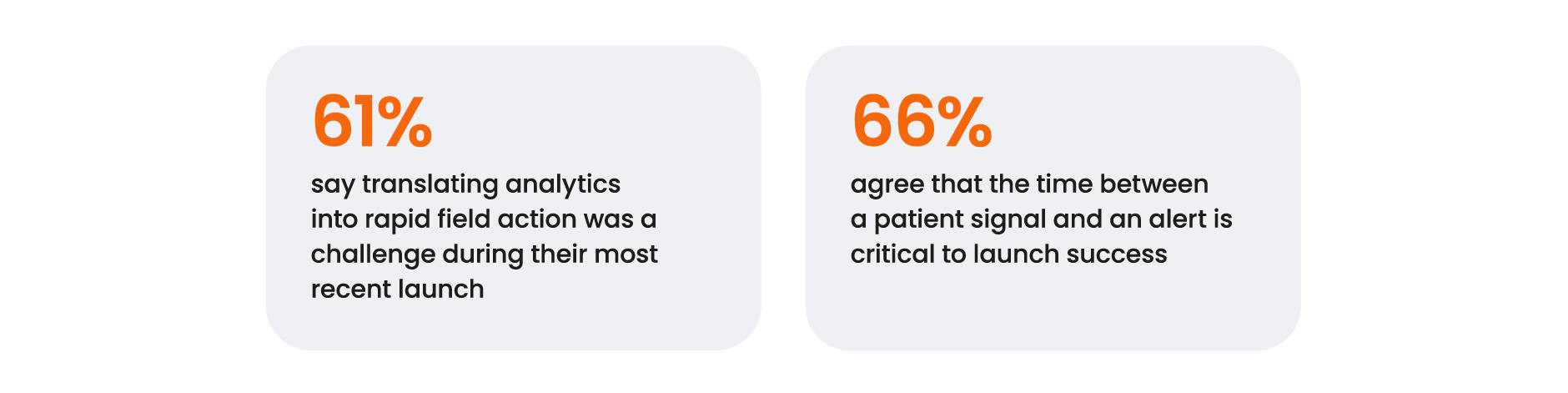
By analyzing signals in claims and lab data, biopharmas can identify time-sensitive treatment events. But there is often a lag between seeing the signal and delivering it to the field so they can take action. Without relevant, timely insights, field teams struggle to execute within critical intervention windows, which negatively impacts revenue.
How quickly can organizations leverage their data to drive meaningful commercial action?
Organizations may underestimate potential improvement in field activation speed
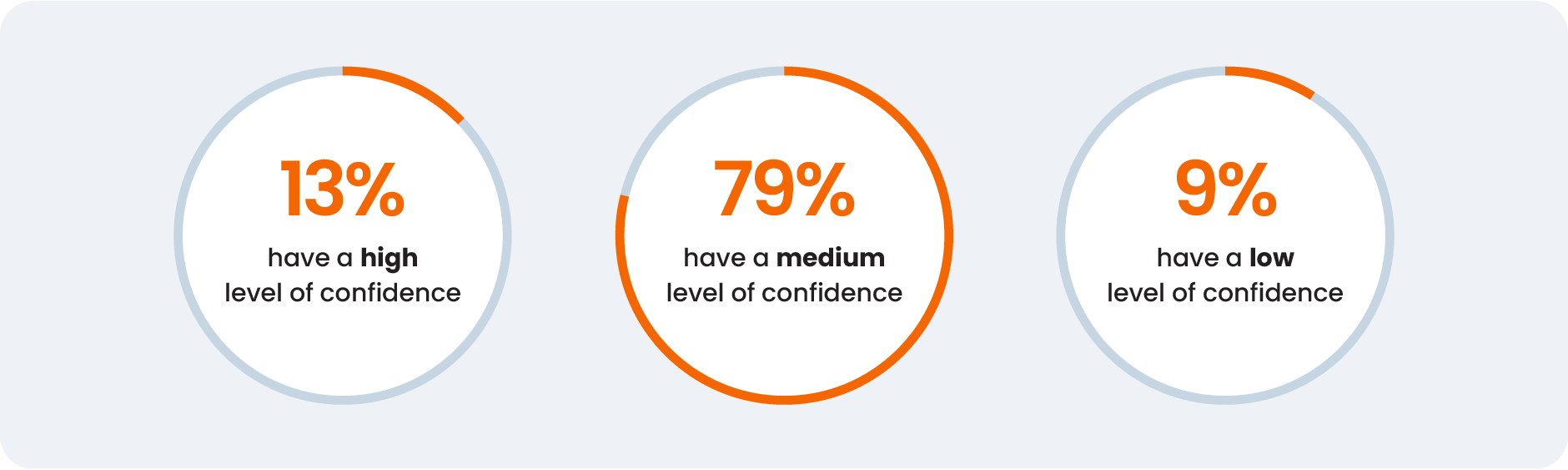
Speed to insight for the field is an area where the industry’s expectations may not match what’s possible in reality. Leaders feel that field teams are relatively well-equipped with timely alerts.
How confident are you that your brand’s field teams are equipped with the best, most timely alerts to engage HCPs and find more patients?
At the same time, leaders overwhelmingly agree that it takes too long to deliver decision-grade insights to the field: 64% of respondents cite this lag as a major gap in their brand’s ability to identify patients and HCPs for engagement.
These results are fairly consistent across role levels and job functions, suggesting that this challenge – and possible misconception – exists across the board.
For your brand, what are the biggest gaps in identifying new patients and HCPs for outreach?
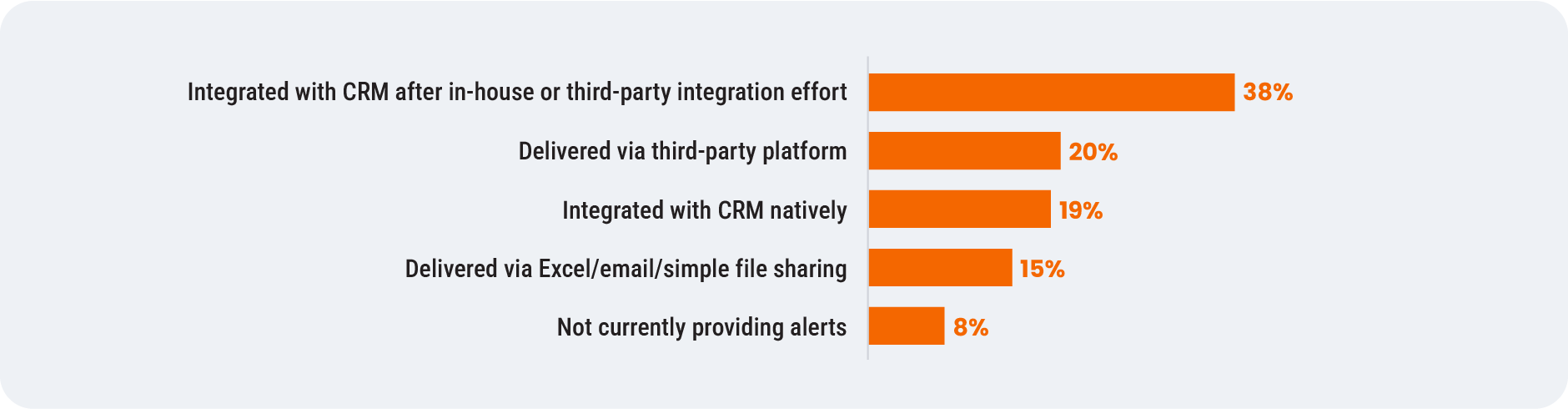
The speed of field alerts across surveyed brands suggests that there is an opportunity to reevaluate:

Traditionally, field alerts rely on data that is delivered on a weekly or monthly basis. Today, some biopharmas are beginning to take advantage of faster data integrated with CRM to provide insights to the field every 24 hours.
With such a small percentage of brands delivering daily insights to their field teams, it’s possible that some leaders are unaware this activation could be significantly faster. This could explain why a majority of leaders have 'medium' confidence, despite recognizing that speed to insight is so critical.
Among biopharmas using AI for field activation, 11% of field teams receive alerts within 24 hours. The key to their increased success is a focus on integrating data. As organizations' integration strategies continue to mature, we expect that number to rise.
The survey suggests that organizations should focus on integration to improve launches. Creating a connected data and applications foundation, whether through internal effort or identifying a vendor with natively integrated products, helps increase the effectiveness of AI initiatives and accelerates field activation.
3 paths toward a connected data foundation
There are three main paths toward integrating data and applications to build a strong, connected foundation for launch.
Connected data and applications drives launch success
A reactive, fragmented approach to purchasing data for launch is no longer a viable path. Some 61% of surveyed brands struggle to deliver insights to the field quickly, and AI adoption is low across multiple launch use cases.
A proactive approach to data and applications with a focus on integration allows organizations to accelerate AI and increase its impact. This is key to addressing efficiency challenges associated with launch, especially in a climate where teams are working with fewer resources and shorter timelines. This not only allows for faster field activation, but also the ability to continue to pivot and adapt with speed.
A connected, harmonized data and applications foundation accelerates the data to action pipeline.
Take the next step
Veeva Compass provides performance data for today's complex therapies, enabling AI with more complete and timely data.