A Global Biopharma Accelerates Trial Timelines with a Unified Clinical Platform
Unified five disparate systems into one clinical platform
Completed implementation ahead of schedule and under budget, using over 90% out-of-the-box configurations
Took ownership of its data and systems to speed decision-making
As its pipeline shifted from late- to early-stage assets, a global biopharma needed a single source of truth to drive rapid decision-making. To achieve this, the company moved away from siloed, specialized vendors to a unified clinical platform.
“Veeva had the most comprehensive platform solution with a truly unified data model to meet our goals,” explains the biopharma’s clinical operations technology lead.
By using over 90% standard software configurations, the team completed the implementation ahead of schedule and under budget. “We believe that a unified technology approach blended with operational capabilities will support our pipeline shift,” notes the clinical operations strategy lead.
Building a unified clinical platform
Since 2017, the biopharma has used Veeva eTMF and Veeva CTMS. In 2024, they also implemented Veeva Study Startup, Veeva Payments, and Veeva Site Connect. “It’s been a huge efficiency gain to manage users in one system instead of five,” says the head of clinical systems. “For example, you can add a site into the system and run it through the eTMF immediately instead of waiting for an integration to run overnight.”
“As we increase our efficiency with trial delivery, we have real-time access to quality data that we can trust. This will help us make the decisions we need to progress our assets quickly,” states the strategy lead. They also noted the consistent user experience, reduced training efforts, and data consolidation that come with a unified clinical platform.
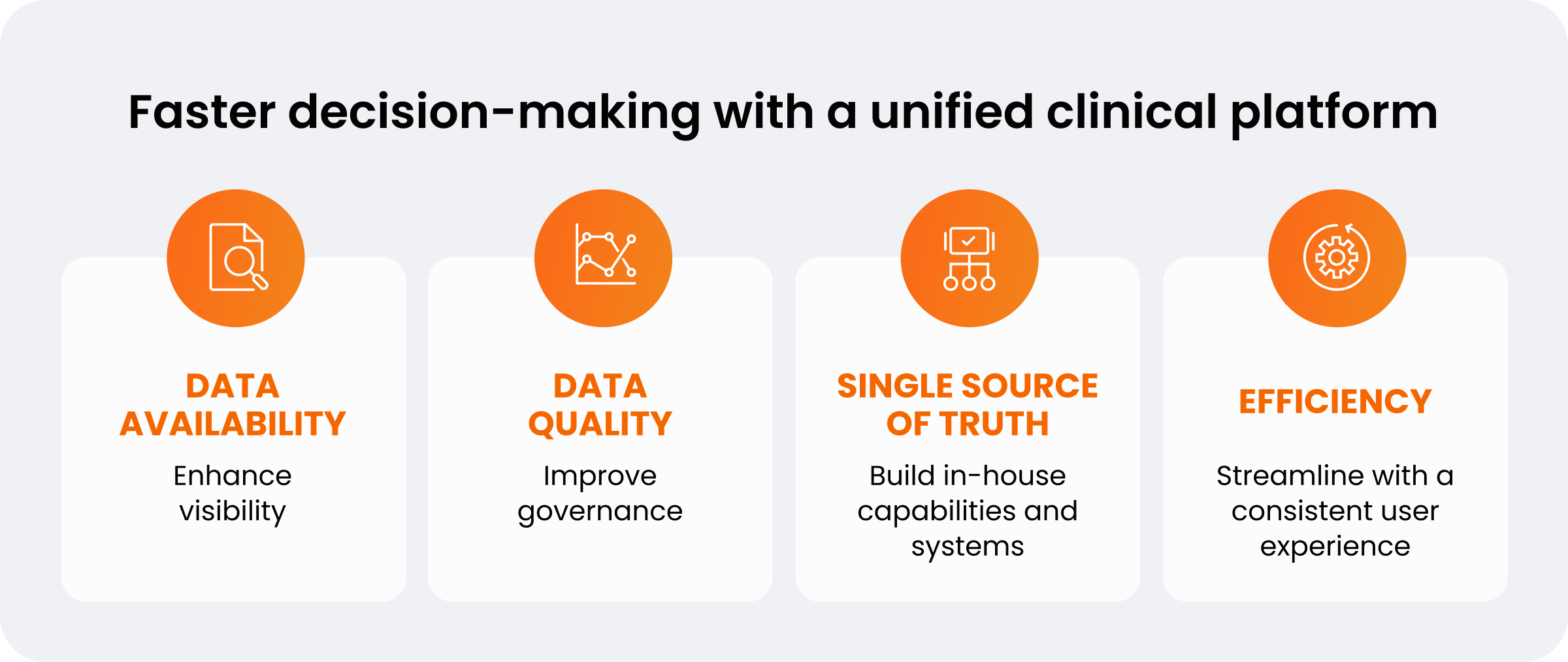
Enhancing data availability and quality
Before unifying clinical operations, the company lacked direct access to operational data for site selection and performance modeling. Since the biopharma used CRO-hosted systems and processes, the data was difficult to aggregate into internal systems.
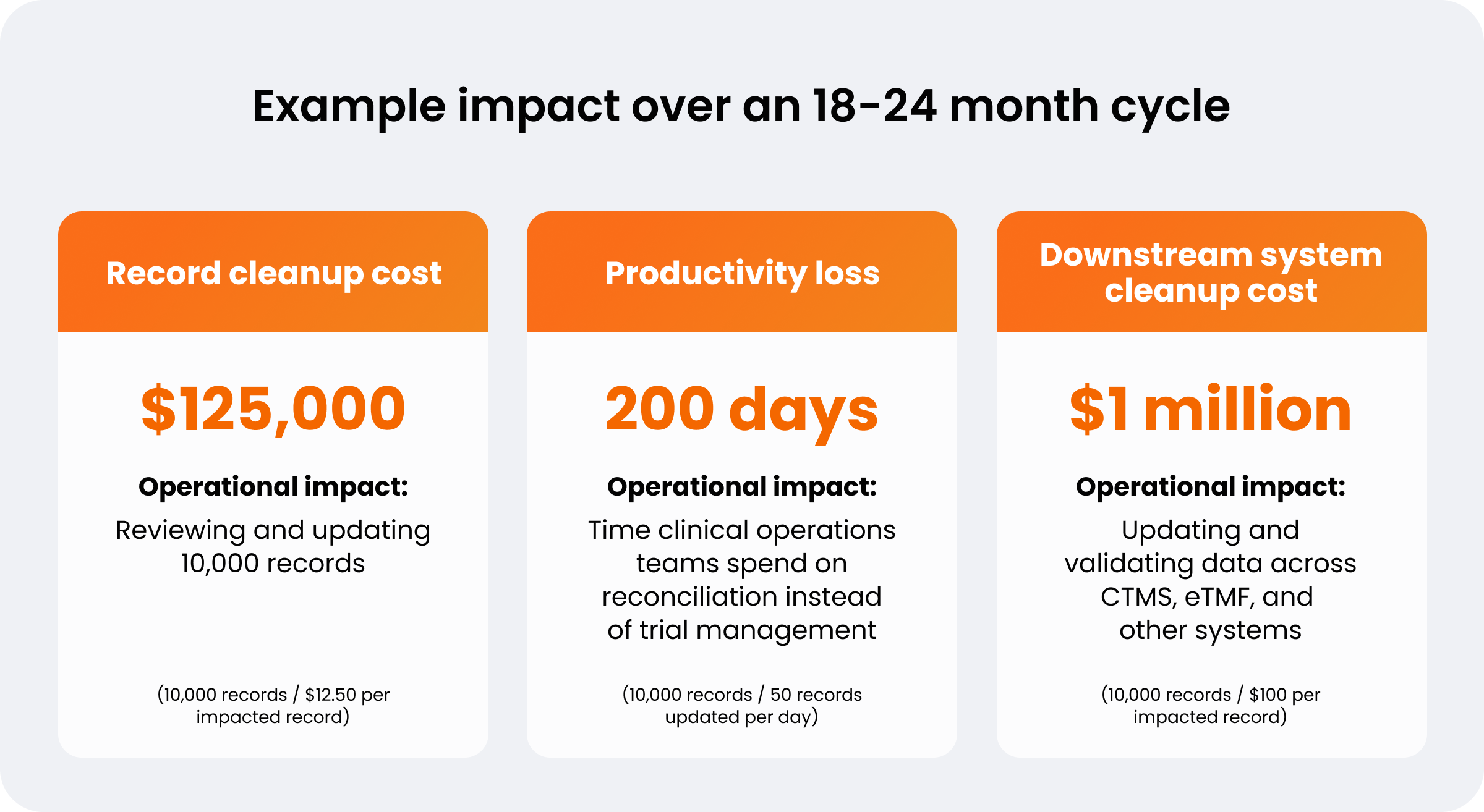
Now that the company owns its own data and systems, the clinical team no longer has to rely on third-party data extracts or manual re-mapping. For a mid-size biopharma managing 25,000 records, the total hidden annual cost of data cleanup can exceed $1 million annually.
Direct system access provides a reliable data set for internal reporting and decision-making. “We are focused on data quality – not just at the time of entry into the system, but throughout its lifecycle, in our leadership outputs, and for decision-making,” emphasizes the strategy lead.
Additionally, the biopharma uses the Veeva Clinical Platform to perform analysis at the portfolio level. For example, the team can pull data for all sites in a specific region to support regulatory inspections. They can also use this data to monitor study timelines and allocate resources more accurately.
Prioritizing site engagement and experience
The biopharma aims to improve site engagement by reducing administrative tasks. “Our teams got out of the trap of doing everything through email. Everybody has real-time visibility into what’s happening with our sites through workflows built into the system,” says the strategy lead.
The clinical team is working toward standardizing site selection, activation, and support using Study Startup, Site Connect, and Payments. This includes reducing duplicate requests, speeding document distribution, and accelerating payment reconciliation.
Lessons for a successful implementation
Ultimately, the biopharma completed its implementation ahead of schedule and under budget. The strategy lead credits this success to having a dedicated focus on change management training and adoption. “Even with the best systems and dashboards, if everybody still uses Excel and works offline, we have done nothing. We are focused on building out future state maintenance,” explains the strategy lead.
Some additional lessons learned include:
- Embracing standard configurations: The biopharma used 90% out-of-the-box configurations to increase speed and improve standardization. This approach prevented delays caused by custom coding and facilitated earlier data ownership.
- Having a dedicated implementation role: The company appointed a head of clinical systems with both business and IT experience to lead the project full-time.
- Prioritizing system testing: Cross-functional teams used a “sandbox” environment to test workflows before the official launch. This allowed the team to identify and resolve configuration issues early in the process. “We encouraged people to try to ‘break’ the system, so that we could pressure test it and prepare for any type of scenario,” mentions the head of clinical systems.
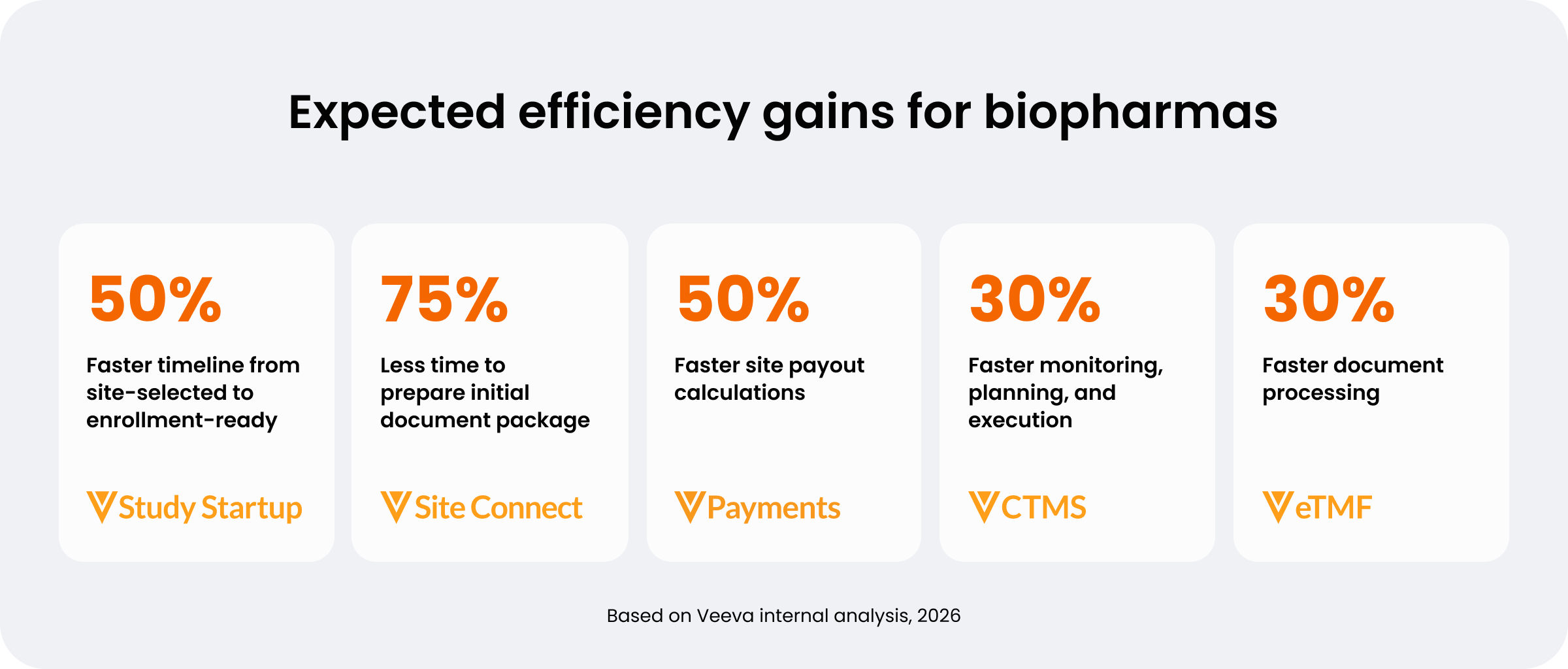
Similar sized biopharmas can expect the following efficiency gains from a unified clinical operations platform:
Learn how Merck is driving transformation with a connected platform.
More Customer Stories
Explore and learn more
Learn More
When No News is Good News: How Recordati Passed a Recent Inspection with No Findings

Learn More
Sanofi: Streamlining Clinical Study Training Across the Portfolio

Watch Video
Boehringer Ingelheim: Driving Efficiency and Collaboration with a Unified Clinical Operations Platform