About Veeva
GHG Emissions Data
We Are Committed to Environmental Sustainability
We are committed to operating in an environmentally responsible manner in accordance with our core values and our status as a Public Benefit Corporation. Our Environmental Policy and our environmental management system (EMS) outline our commitment to continuous improvement in regard to pollution and emissions reduction, energy and water efficiency, waste reduction, tracking the effectiveness of our environmental sustainability program, and meeting or exceeding applicable environmental laws and regulations.
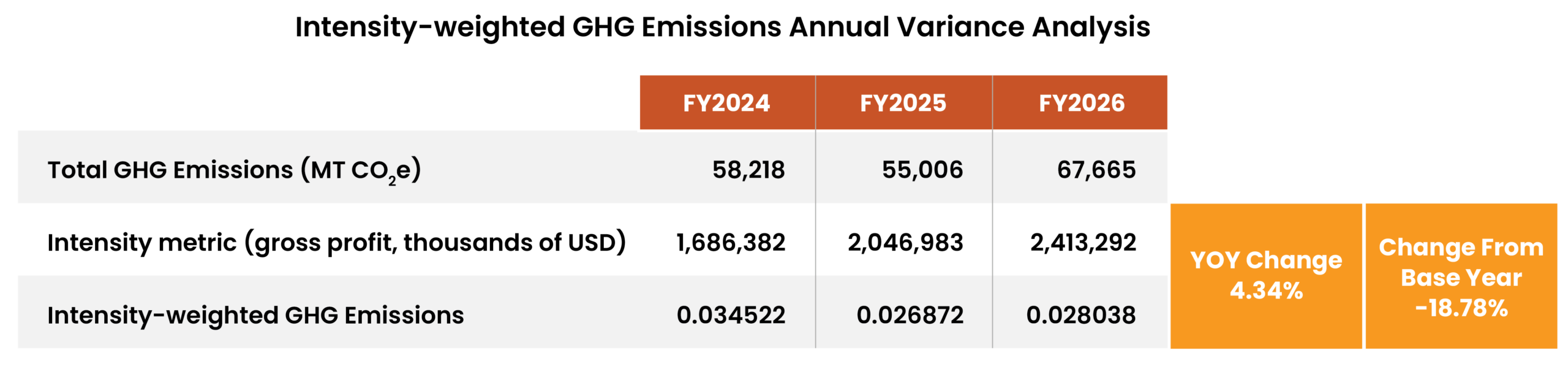
As part of our commitment to environmental sustainability, we track and disclose our full greenhouse gas (GHG) emissions in accordance with the GHG Protocol. We have identified, calculated, and disclosed all relevant emissions categories within Scope 1, Scope 2, and Scope 3 emissions*. In line with the commitments of our EMS, we have developed an improvement plan and emissions reduction targets which have been validated by the Science Based Targets initiative. We have committed to reduce absolute scope 1 and 2 GHG emissions 58.8% and to reduce scope 3 GHG emissions from purchased goods and services and capital goods 63.8% per million USD gross profit added by FY2035.
For the fiscal year of 2026 (beginning February 1, 2025 and ending January 31, 2026), Veeva Systems generated 67,665 metric tons (MT) of GHG emissions in CO2e (location-based) and 67,484 MT CO2e (market-based). Scope 3 makes up the majority of emissions with 67,193 MT CO2e, followed by Scope 2 (location-based) with 242 MT CO2e and Scope 1 with 230 MT CO2e. External verification of these results can be found here.
Breakdown of FY2026 Emissions
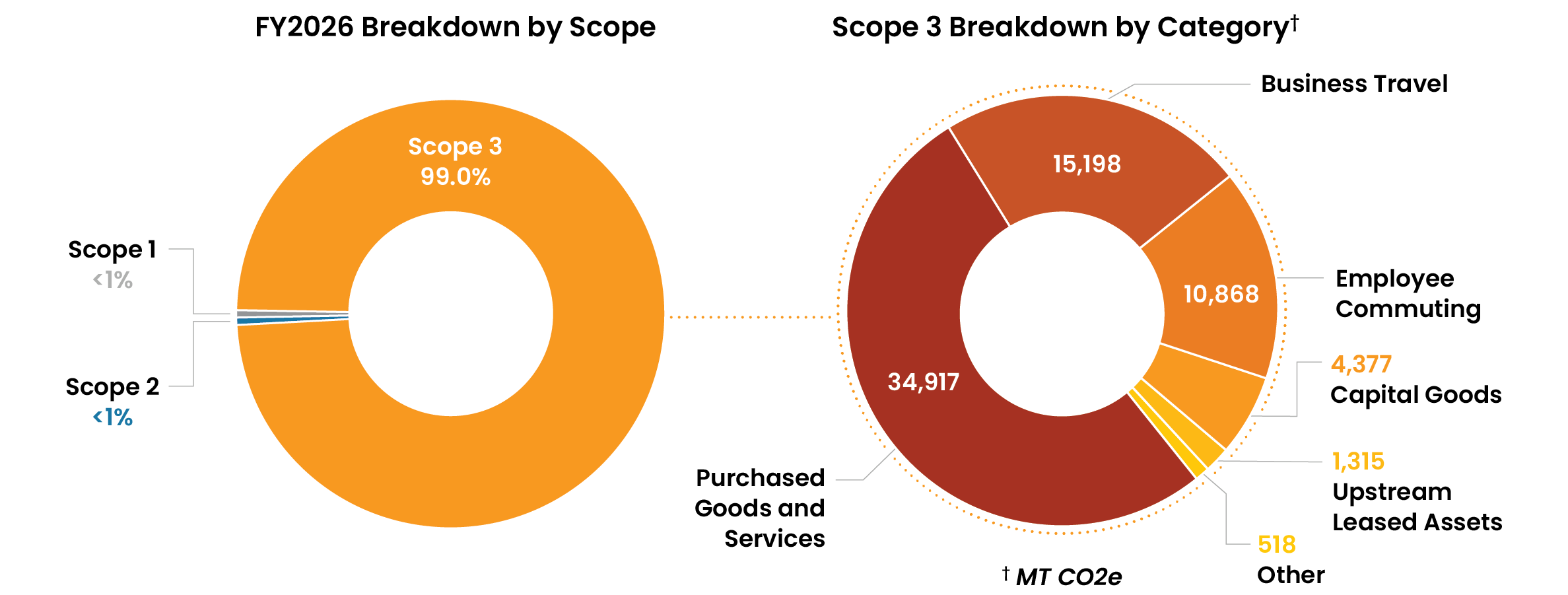
Data as of January 2026. *Corporate GHG emissions are grouped into three ‘scopes.’ Scope 1 emissions are direct GHG emissions from operations that are owned or controlled by the reporting company. Scope 2 emissions are indirect emissions from the generation of purchased energy consumed by the reporting company. Scope 3 emissions are all other indirect emissions (not included in Scope 2) that occur in the value chain of the reporting company.