2026 Media Buying Trends for Biopharma Marketers
Discover how the latest media buying trends can help optimize your marketing mix and maximize brand conversion lift.
The biopharma advertising landscape has experienced significant disruption over the past two years. Analysis of over 3,000 campaigns measured by Veeva Crossix (running from 2024 through Q1 2026) reveals critical shifts in digital mix allocation, cross-channel synchronization, and the evolving role of brand websites.
The digital mix is shifting to connected TV (CTV) and streaming video
Digital impressions have shifted away from traditional display channels toward video-first strategies, specifically CTV.
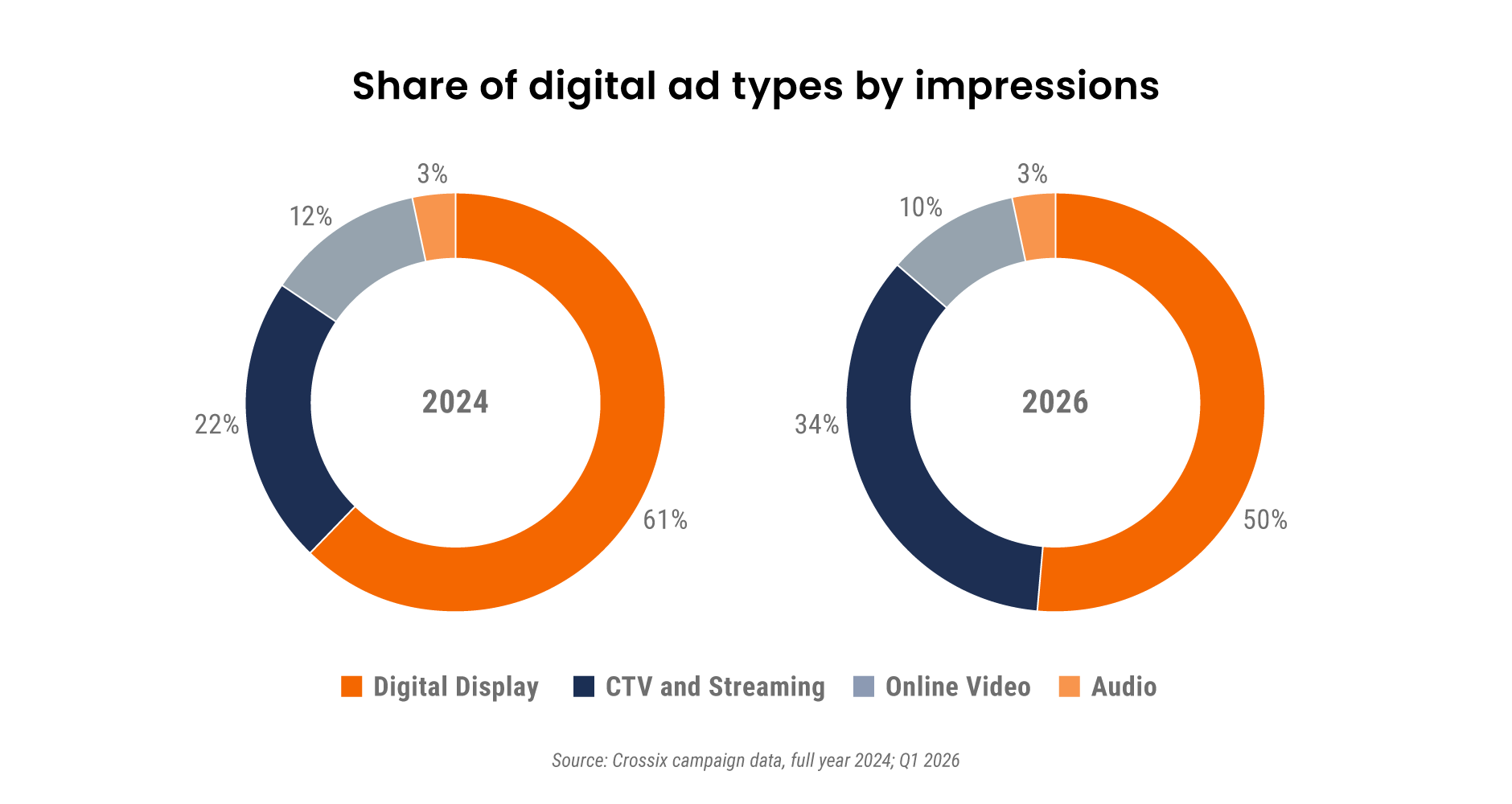
Marketers recognize that CTV is an effective channel for reaching qualified patients and driving conversions.
- Targeting precision: The average CTV targeting multiple increased by 18% year-over-year, reflecting enhanced audience precision and the increased use of health audience targeting.
- Conversion lift: CTV drives an average 21% lift in net brand conversion, compared to a 16% lift generated by digital display.
For younger patients, CTV is 1.3 times more effective at driving conversions than national linear TV. Conversely, for indications targeting populations aged 55 and older, linear TV continues to outperform CTV in driving conversion rates. For campaigns targeting both older patients and younger caregivers, a simultaneous, dual-platform approach optimizes reach across both demographics.1
Aligning DTC and HCP marketing provides outsized impact
Isolating media tactics can limit campaign efficacy. When DTC and HCP advertising are strategically aligned, data shows there is an amplifying effect.
Patients exposed to a CTV advertisement who subsequently visit a display-exposed HCP show a 3 times higher net conversion lift than those exposed to the CTV advertisement alone.
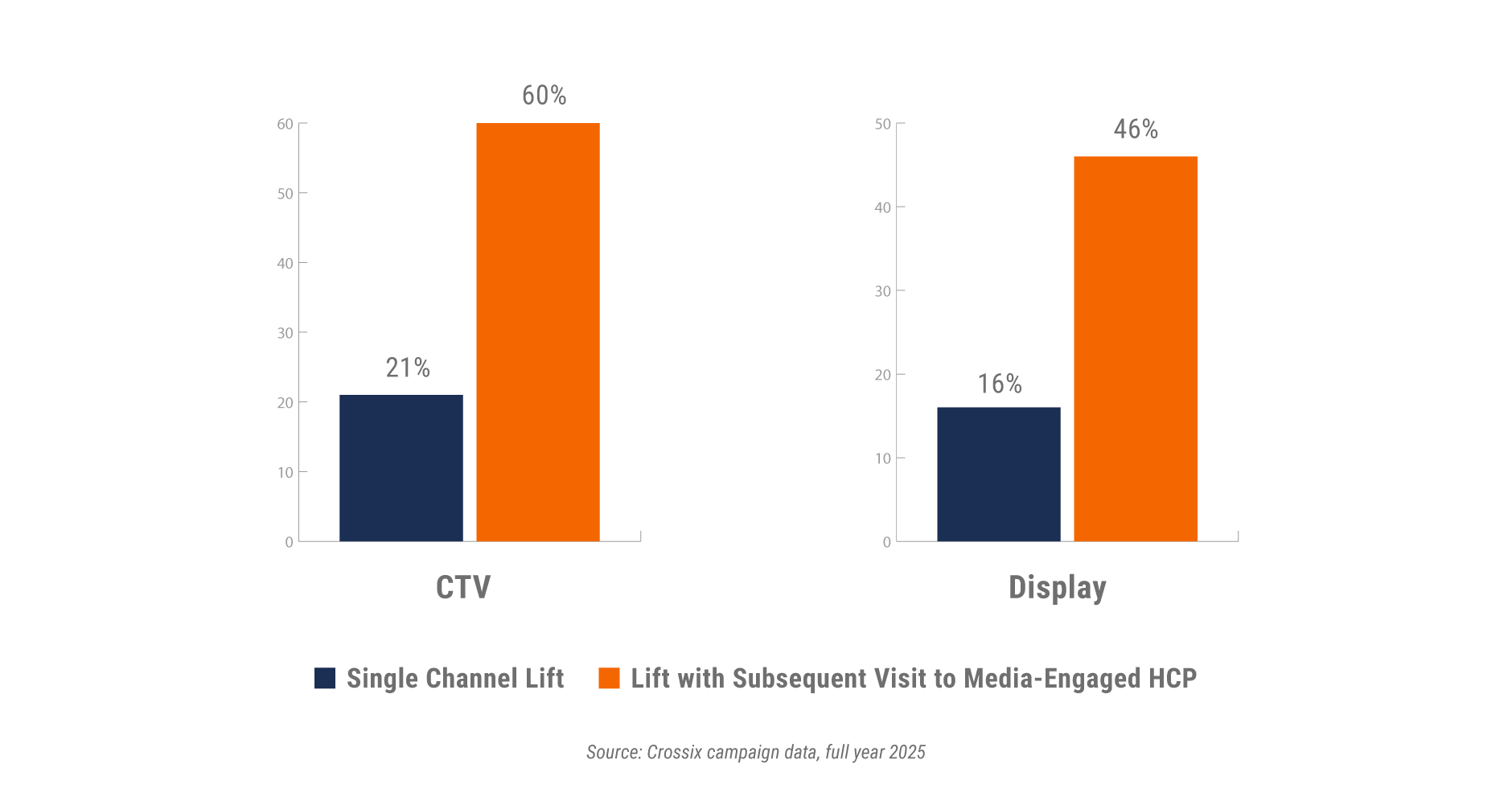
Priming physicians with relevant brand messaging prior to patient inquiries removes friction at the point of care.
The strongest plans pair CTV with site engagement
When patients exposed to CTV also visit the brand’s website, there is a 3 times higher lift in net conversions compared to CTV alone.
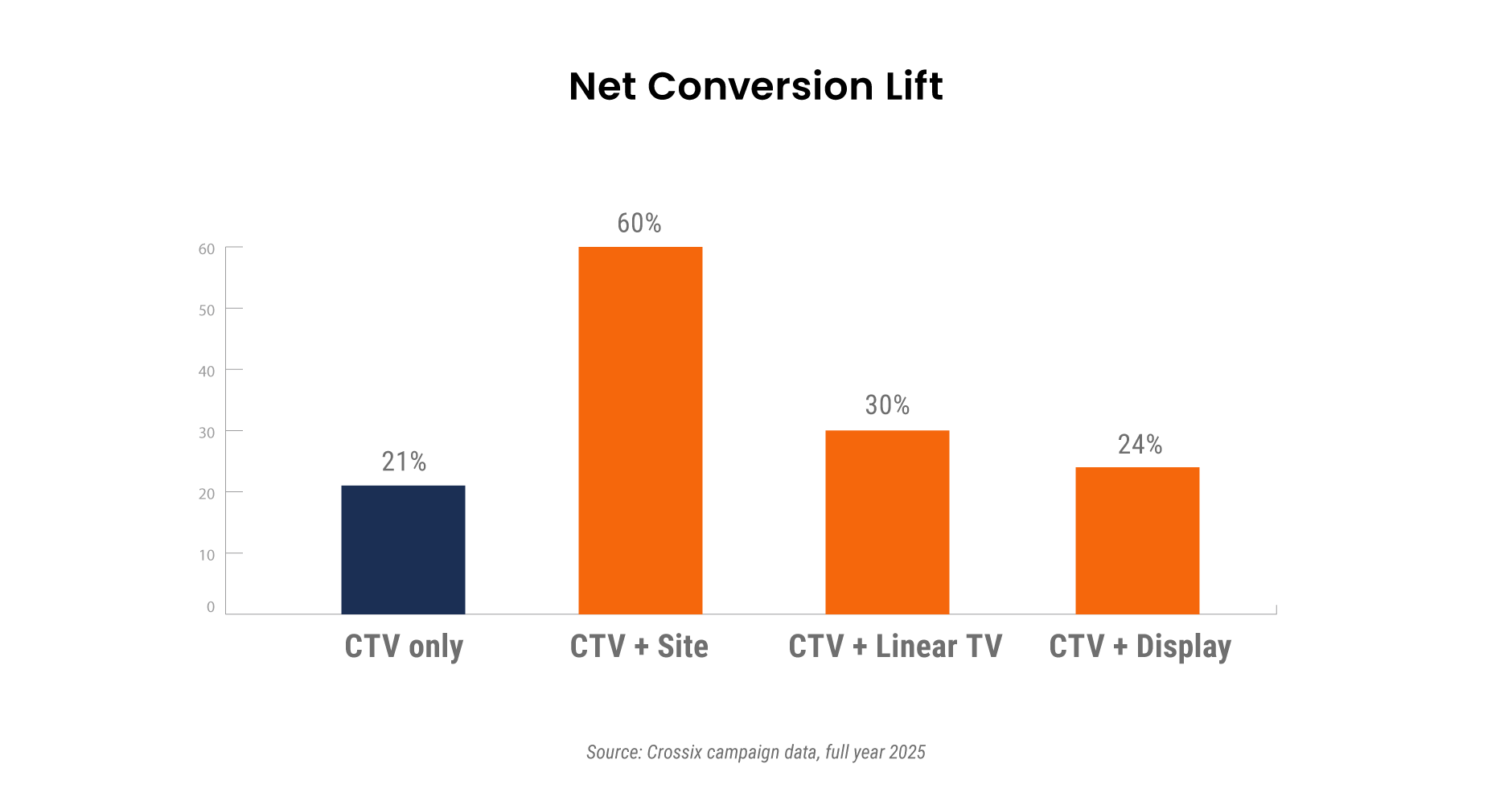
With CTV, brands can use precise targeting to engage qualified patients. Specific and clear calls-to-action can drive site visitation and amplify the impact of CTV campaigns.
Brand.coms remain highly relevant for patients
Despite the rise of third-party platforms and conversational AI search tools, brand websites remain a critical component of the patient journey.
Top high-intent actions driving conversion
While tactical content like Patient Enrollment and Savings/Financial Information continue to show an 85% higher conversion rate than other site actions, there is growing patient demand for interactive self-education tools.
- Conversion rates for eligibility quizzes increased 4 times year-over-year.
- Conversion rates for patient education resources increased 2 times year-over-year.2
Patients actively utilize brand websites as verified, trusted alternatives to validate information found via other digital sources, including generative AI content. Integrating compliant conversational AI tools directly onto brand websites allows companies to meet consumer expectations for modern interfaces while maintaining clinical accuracy.
Brand maturity dictates optimal media frequency
Crossix Omnichannel Boost measures the full marketing plan from field engagement to HCP digital marketing to DTC media. Based on analysis of multiple campaigns across different levels of brand maturity, marketers are effectively shifting investments as they graduate from launch phase to growth phase.
HCP activation
New market entrants (years 0-2) require high-frequency HCP exposure to establish clinical recall and break through therapeutic category noise.
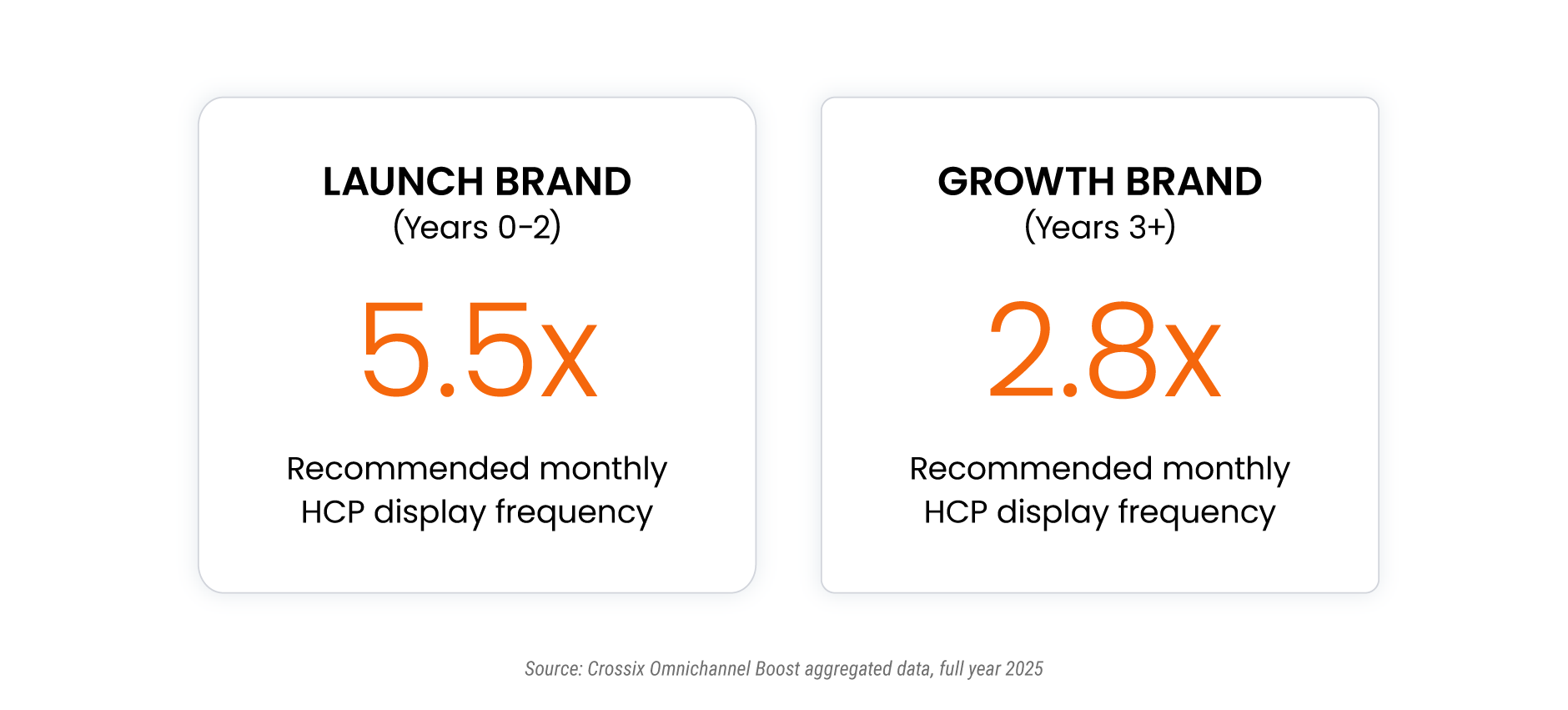
Once the target HCP audience is saturated and brand adoption stabilizes, HCP media frequency can be reduced by 50%.
Building awareness with relevant patients
Mature brands need to prioritize DTC advertising to maintain awareness and grow the patient funnel.
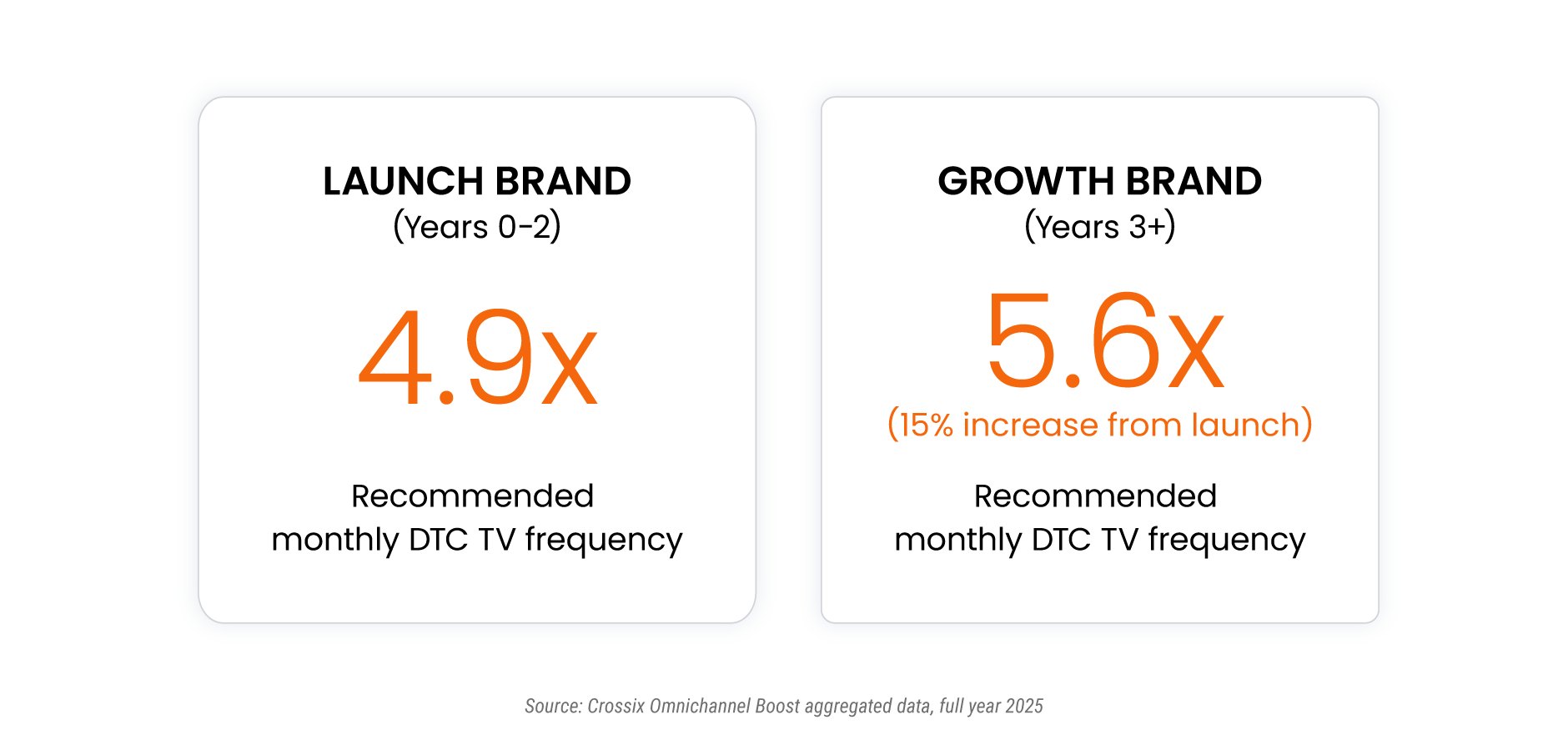
Optimal frequencies were measured in aggregate across multiple campaigns and are recommendations only. It's important to note that there will be significant variation among individual brands depending on the category, competitive landscape, and patient profile.
Putting media trends into action
Changing consumer behavior and new data-driven targeting present tremendous opportunities for today’s biopharma marketers. High-growth channels like CTV offer unparalleled audience precision, but maximizing their impact depends heavily on aligning with viewership behaviors and creating synchronization with HCP marketing. By calibrating media frequency to your product's lifecycle — over-indexing on physician outreach during launch and shifting to consumer awareness during growth — and leveraging interactive brand websites as high-intent conversion engines, marketers can build a highly efficient marketing strategy.
Leveraging data across field engagements, HCP digital marketing, and DTC media provide rich insights that can help optimize your media plan. Discover how one growth brand used this strategy to drive new patient starts.
2Crossix campaign site impact data, full year 2025, Q1 2026