Agentic Clinical Operations: Shifting Effort From Execution to Oversight
What agentic biopharma means for clinical operations
Clinical teams lose a substantial amount of time to routine, administrative tasks that consume hours they could be spending on higher-value work. In response, the industry is moving towards an agentic biopharma operating model. Within this model, agentic clinical operations deploys AI agents across trial stages to automate routine and manual workflows. Integrating agentic labor into everyday clinical processes will improve trial efficiency and ensure continuous audit readiness, freeing the clinical workforce to refocus on high-value strategic work.
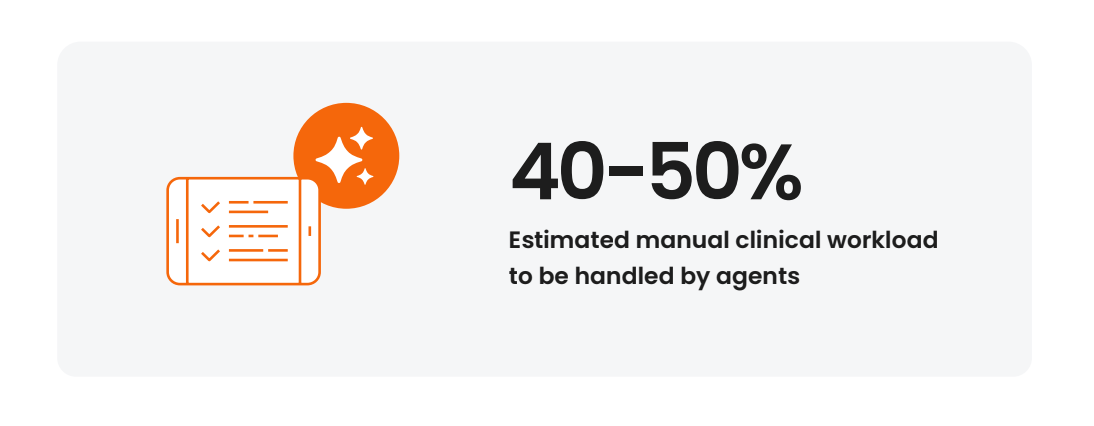
Agentic clinical operations will transform clinical trial execution. As humans and agents collaborate under this new model, Veeva estimates that agents will handle 40-50% of the manual clinical workload, freeing human teams to transition from operational execution to strategic oversight.
The future vision for agentic clinical operations
Agentic clinical operations capabilities will evolve over time, but the vision is clear: AI agents will transform how clinical trials are designed, executed, and managed. Below are six areas where that impact will be significant:

First-time right study design and feasibility: Generate optimized protocols to prevent downstream amendments and enrollment delays

Automated site activation and onboarding: Automate document collection, administrative workflows, and contract routing to clear bottlenecks pre-enrollment

Autonomous document processing and inspection-ready TMF: Index, quality check, and audit documents in real time, reducing manual document management and maintaining inspection readiness

Continuous site operations and support: Deliver 24/7 administrative support to trial sites to triage queries and maintain protocol compliance between visits

Real-time site quality and risk oversight: Monitor data entry continuously to catch anomalies, deviations, and risks

Automated study orchestration: Automate study setup and coordinate milestones, schedules, and status reports to keep trials on schedule
Delivering on the vision: accelerating trials with Veeva Falcon
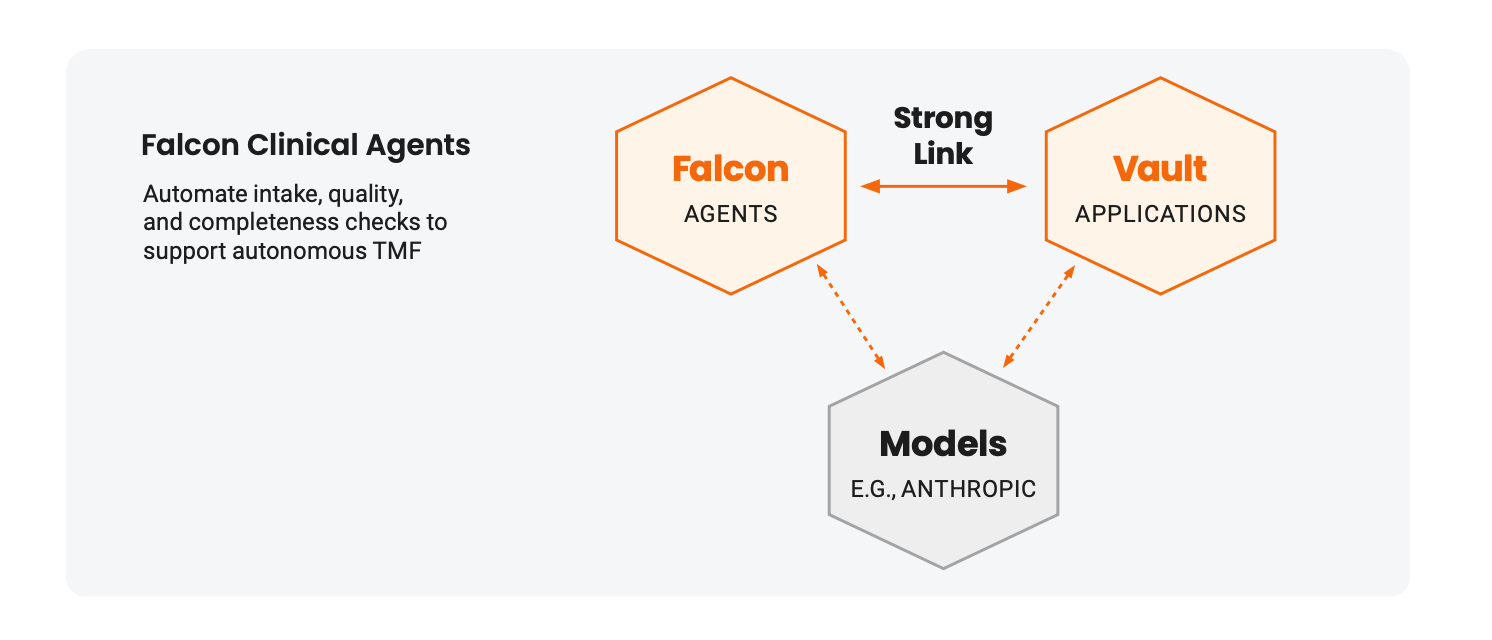
Under the MAAP Architecture™, core applications like Veeva Vault will evolve into a dual-mode model where both humans and agents act as end users. Agents will work within the clinical platform at scale to reduce manual work and transform clinical operations.
Veeva is bringing the agentic clinical operations vision to life through Falcon. Available today is Falcon Intake, a document processing agent that classifies documents, populates document metadata, and performs quality checks. Automating document intake with Falcon reduces bottlenecks while checking compliance against diverse document types.
Coming in early 2027, Falcon TMF ensures continuous audit readiness. The agent automates document reviews for completeness, handles reconciliation, oversees issue resolution, and manages TMF setup and closeout. With TMF agents, biopharmas will see a significant reduction in manual effort and TMF operating costs.
Over time, classification and QC will become automated, with agents continuously managing completeness. This will shift study and TMF teams away from doing the work themselves and toward overseeing exceptions, reviewing agent output, and focusing on strategic TMF capabilities.
Future capabilities under consideration include Falcon Study Management and Falcon Monitoring, agents that will automate workflows including budgets and contracts, study training, visit reports, protocol deviations, and site communications.
By reducing manual effort, Falcon will drive operational efficiencies that lead to streamlined clinical trial execution and ultimately accelerate trial delivery for patients.
A human-in-command clinical operations workforce
Transitioning repetitive work to agents does not replace the need for human expertise in clinical trials. Instead, humans will evolve into high-value, strategic roles defined by:
Strategy
Rather than spending hours drafting protocol documents or creating study plans, clinical managers will evaluate and refine agentic outputs. For example, when agents suggest optimal countries and sites based on historical data and a machine-readable protocol, human decision-makers will weigh those recommendations against strategic priorities like diversity goals and target patient population representation. Managers will also navigate trade-offs between agent recommendations and conservative approaches to ensure proactive, strategic trial management.
Relationship management
Clinical research associates (CRAs) will transition away from manual processes like source data verification and document collection to focus on site engagement. They will spend more of their time supporting site staff, providing targeted training, and helping set newer clinical research sites up for success. While agents manage background documentation and feasibility surveys, CRAs will engage directly with principal investigators to gauge trial interest, understand site constraints, and build long-term sponsor partnerships.
This shift will also extend to patient recruitment and retention. Because patient engagement requires interpersonal connection, teams will use agents primarily for content generation while human leaders design and execute high-touch engagement strategies.
Agent oversight
Within agentic clinical operations, agents function as new team members alongside their human counterparts. Clinical team members will take on supervisory responsibilities that oversee agent performance, provide feedback, and enforce risk-proportionate oversight based on task complexity. Routine tasks like eTMF filing will require light oversight, while contract drafting and negotiation will require strict review.
How to prepare for the agentic clinical operations transformation
The agentic clinical operations transformation becomes a reality when the operating model evolves. This includes tackling the following:
- Governance and process: Establish a model that defines human oversight, escalation thresholds, and risk controls for agents and redesign workflows to reflect new business processes with humans and agents working together.
- Change management and training: Enable change through a phased roll-out that builds confidence among study teams.
- Operating model: As agents absorb volume-based work, the operating model will need to shift from supporting manual execution to supporting agent oversight. This means redefining roles and reporting lines, adjusting staffing and resourcing algorithms, rebalancing outsourced scope, and reassessing location strategy.
The next paper in this series will analyze early use cases and the specific impacts and estimated manual effort reductions in clinical data management.
Connect with Veeva Business Consulting to learn more about agentic clinical operations and how to transform your operating model to enable it.