Business Case: Justifying the Strategic Necessity of a Sponsor-Owned CTMS
Full-service outsourcing (FSO) and functional-service provider (FSP) continue to be common operating models for small and scaling biopharmas. While an FSO or FSP model is efficient for trial execution, it often creates an oversight gap that leads to costly delays for sponsors.
By owning their clinical trial management system (CTMS), sponsors can reduce trial conduct costs and maintain a record of oversight to ensure regulatory compliance.
The hidden costs of poor clinical trial oversight
When sponsors rely solely on a CRO’s CTMS without having their own, they do not have a centralized view into trial execution. This leads to:
- Compliance challenges: When data resides in various CRO systems and spreadsheets, users share information via email instead of system workflows. On average, sponsors spend $42,500 managing trackers per 100 sites.1
- Overreliance on CRO reporting: Waiting on reporting creates a 2-4 week lag in data visibility and prevents proactive intervention, resulting in 20% slower issue identification.2
- High data transfer fees: At the end of a study, sponsors often pay high data extraction fees to get their own information back from a CRO’s system, followed by months of internal validation.
Assessing sponsor oversight in outsourced trials
To assess how well they demonstrate oversight, sponsors can consider the following questions.
- When you change CROs, does your visibility into trial activities change?
- Can you prove when you learned about a study issue?
- Can you update your board about trial status without CRO input?
- Are you negotiating based on SLA data?
- Are you compliant with ICH E6(R3) oversight requirements?
If you answered “no” to one or more, you may struggle to demonstrate oversight throughout your trial. This may put you at risk for an inspection finding.
Taking control: leveraging a CTMS for successful outsourced trials
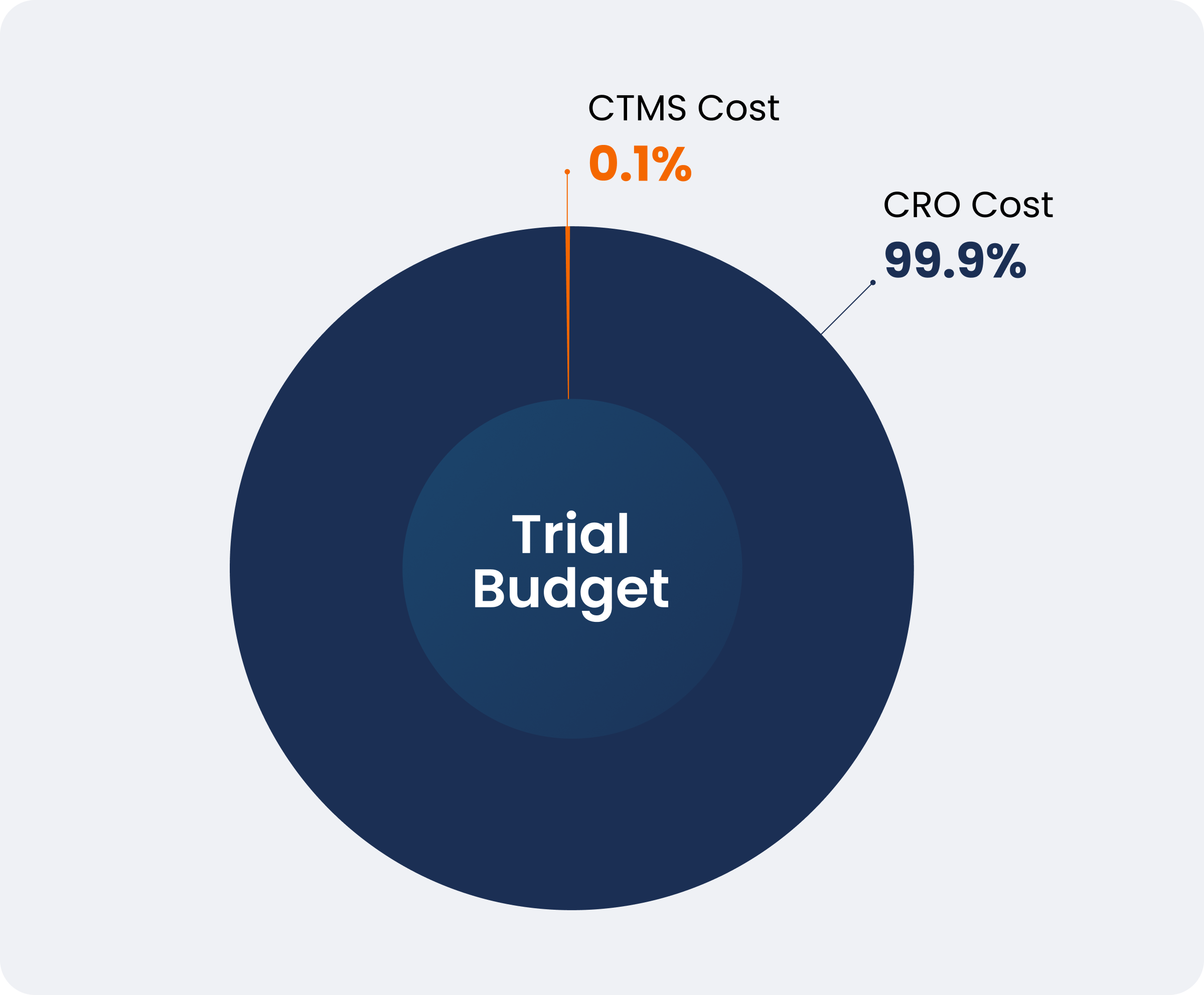
Investing in an in-house CTMS helps sponsors protect their investments by ensuring that studies meet expectations. On average, the cost of a CTMS is just 0.1% of a trial budget.3
Bonne Adams is the vice president of operations at Inhibrx Biosciences, a clinical-stage biotech with a lean team of less than 20 clinical operations employees. The company employs a hybrid operating model, where 50% of its study conduct activities are outsourced to CROs that work in Inhibrx systems. Adams views the company’s CTMS as essential to its operations. “In terms of study design, Veeva CTMS is your base system for setting up all other systems. It allows for data sharing across functional areas, which reduces the risk of inconsistencies and errors,” Adams explains.
Having a CTMS will reduce costs associated with:
- Mastering data across CRO and sponsor systems
- Protocol deviation tracking and managing site issues
- Actioning low and non-enrolling sites
- Study milestone tracking and management
- Status reporting for compliance, issues, and enrollment
- Dashboards and metrics
- Protocol amendment site documentation and distribution
The manager of clinical trial systems at a biotech that outsources 60% of its studies recommends starting small when first implementing a CTMS. “Your process should be really simple initially. Then, you can scale up,” he advises. “We started by having everyone write their oversight monitoring reports in Veeva CTMS. Then, once they felt comfortable, we asked people to also put their KPIs in. Next, we moved on to risk management and more.”
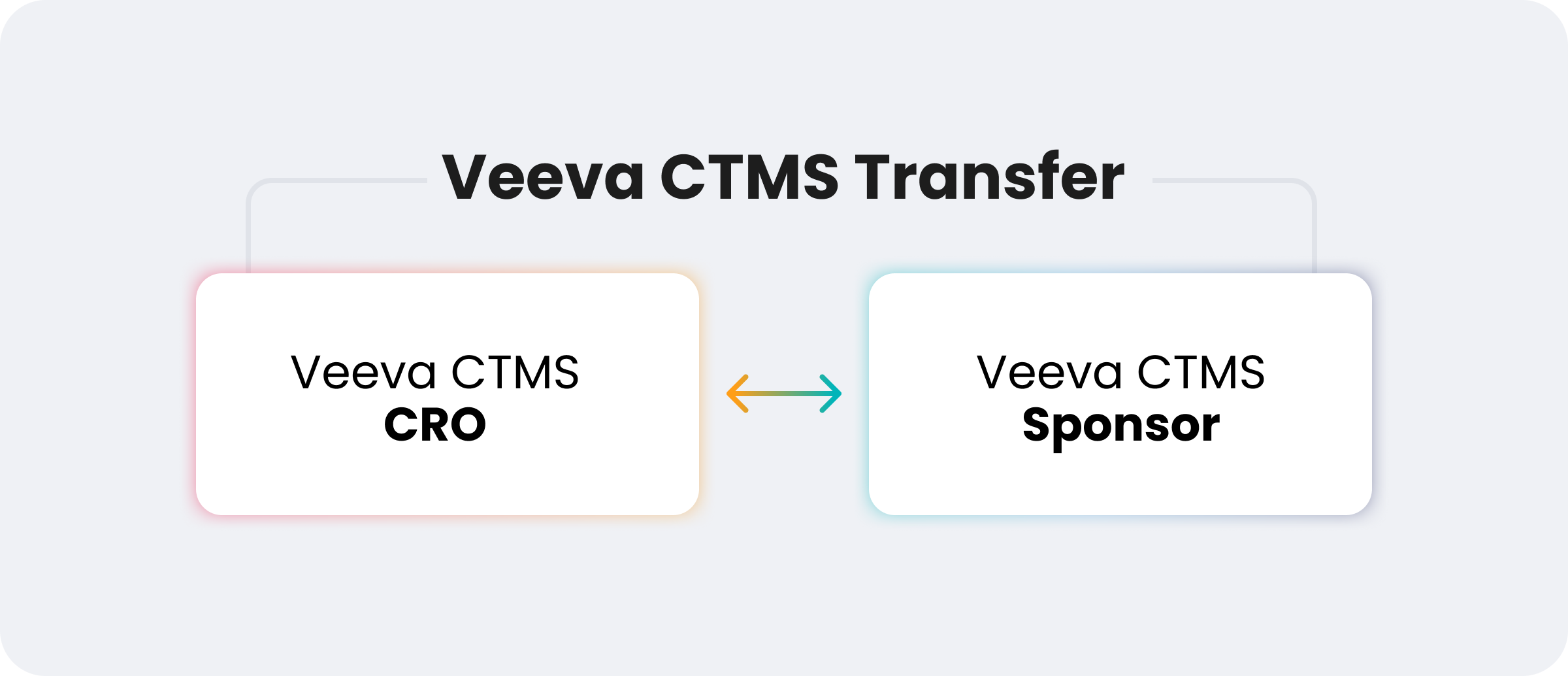
The company’s clinical team also uses Clinical Transfer to easily receive data from one of their CROs. This feature automates the daily transfer of study data from its CRO, providing the team with secure, read-only access to their trial data. “With Clinical Transfer, we maintain oversight and visibility while allowing the CRO to leverage its own Veeva CTMS,” says the manager of clinical trial systems. “It saves us significant time, effort, and costs associated with manual data uploads and reconciliation.”
Closing the oversight gap for long-term trial success
For small and scaling biopharmas, the oversight gap created by relying solely on CRO systems is a persistent drain on both time and capital. Transitioning to a sponsor-owned CTMS enables clinical teams to move away from manual tracker management and toward data-driven trial strategy. By establishing a single source of truth today, organizations can also build the clean data foundation required to leverage future AI advancements. Ultimately, investing in a CTMS is about data ownership, securing the oversight necessary to get treatments to patients faster.
1 Time and motion studies with Veeva customers, 2026
2 Aggregated Veeva customer feedback, 2026
3 Veeva internal analysis, 2026